 Skip to content
Recovering from a stroke can come with many challenges, both physical and emotional.
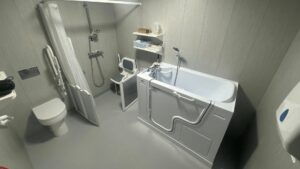
Everyday tasks like using the bathroom can become unexpectedly difficult. That’s why the right bathroom aids for stroke victims are essential. With the right setup, people can regain a sense of safety, comfort, and independence in one of the most essential areas of the home.
At Age Care Bathrooms, we understand how vital accessible design can be. If you’re recovering from a stroke yourself or supporting a loved one, this guide explores the most effective bathroom aids for stroke victims and how to create a space that restores confidence and control.
Contents
Why Bathrooms Need Adapting After a Stroke
The bathroom is one of the most dangerous places for anyone with limited mobility or impaired coordination. Wet floors, tight spaces, and the need to stand, twist, or balance can increase the risk of slips, falls, and injuries. For stroke survivors, these challenges are even more acute.
After a stroke, a person may experience:
- Muscle weakness or paralysis (often on one side of the body)
- Reduced coordination or balance
- Difficulty gripping or holding objects
- Fatigue
- Cognitive or memory difficulties.
All of these can make everyday bathroom routines, such as standing in the shower, getting up from the toilet, or using taps, much harder. That’s where tailored bathroom aids come in.
The right combination of mobility-friendly design allows stroke survivors to maintain personal hygiene with dignity while reducing strain on carers and loved ones.
Our Best Bathroom Aid Recommendations for Stroke Victims
A stroke affects everyone differently. Some people make a full recovery; others experience lasting mobility issues. That’s why there’s no one-size-fits-all solution when it comes to bathroom safety. Instead, it’s about choosing aids and equipment that support the individual’s specific needs.
Here are the most helpful bathroom aids for stroke survivors that our team recommend, grouped by function:
1) Walk-In Showers
A walk-in shower is often one of the most beneficial changes you can make in a post-stroke bathroom. Unlike traditional tubs or raised showers, walk-in showers have a low or level entry threshold, making them easier to access with a walker, wheelchair, or caregiver support.
Key features of walk-in showers that benefit stroke survivors:
- Low-step entry: A low-profile tray keeps the step to a minimum. For wheelchair users, a level-access wet room allows roll-in access.
- Non-slip surfaces: Reduce the risk of slipping, even with wet feet or poor balance.
- Wide opening: Accommodates mobility aids and carer assistance.
- Easy-reach shower controls: Positioned for use while seated or for one-handed operation.
- Thermostatic shower valves: Prevent scalding and allow safe, consistent temperature control.
If fatigue or poor balance is an issue, a fold-down shower seat and height-adjustable handheld showerhead allow for seated bathing. An open-plan design provides greater freedom and carer access for stroke survivors with more limited mobility.
2) Grab Rails and Support Bars
Support rails are among the simplest, most affordable, and effective aids for stroke victims.
Installed in key locations around the bathroom, grab rails provide physical support for standing, sitting, or moving. For stroke survivors with one-sided weakness (hemiparesis), correctly positioned grab bars can mean the difference between independence and dependence.
Recommended placements for grab rails include:
- Beside the toilet, for easier sitting and standing.
- In the shower or wet room area for balance while washing.
- Near the sink for stability while using the tap or brushing teeth.
- Along walls or pathways to assist with navigation.
Our team’s pro tip: Choose rails with a textured or non-slip grip, and install them at heights that suit the user’s reach and strength.
3) Raised Toilet Seats and Frames
Getting on and off the toilet can be a real challenge after a stroke, particularly for those with weakness in the legs or difficulty bending.
Toilet aids to consider include:
- Raised toilet seats: These increase the seat height, reducing the effort needed to sit or stand.
- Toilet frames: Sturdy arms on either side of the toilet provide support when lowering or rising.
- Wall-mounted grab rails offer additional balance support and are ideal for one-sided use.
- Bidet toilet seats or wash-and-dry toilets: These are helpful for individuals who struggle with wiping or have limited dexterity in one arm or hand.
These modifications help stroke survivors use the toilet with more comfort and privacy, reducing reliance on carers.
As part of an accessible bathroom installation, we can fit a comfort-height toilet, which raises the seat height for good.
4) Accessible Sinks and Taps
After a stroke, fine motor skills and grip strength can be affected, making small knobs or twist taps difficult to use.
Helpful adaptations include lever taps, which are easier to use with one hand or limited strength. Sensor-activated taps can also eliminate the need to turn anything. Hot and cold taps should be clearly marked with both colour and a letter, so they’re easy to tell apart. Wall-mounted sinks provide space beneath the basin for wheelchair access or seated use.
Try tilt mirrors, as they allow easy visibility from a seated position. For those with significant upper-body weakness, it’s also useful to have shelves, toiletries, and soap dispensers positioned at reachable heights.
5) Shower and Bath Seat Options
A seat in the shower or bath can be essential for anyone who tires easily, has poor balance, or requires assisted bathing.
Options include:
- Fold-down wall-mounted seats: Save space and provide a stable platform for seated showering.
- Freestanding shower chairs: Lightweight and portable, with slip-resistant feet.
- Bath lifters: Mechanically lower and raise the user in and out of a bath, allowing them to enjoy soaking safely.
- Transfer benches: Help users slide into the tub from a sitting position with appropriate grab bars and controls.

How to Create a Stroke-Friendly Bathroom: Our Design Tips
Designing a safe, functional bathroom isn’t just about individual aids; it’s about how everything works together.
Here are some key planning tips for modifying a bathroom for stroke recovery:
Prioritise Space and Flow
A bathroom designed for a person who has had a stroke must offer space to move freely, especially with a walker, wheelchair, or carer. That means:
- Wider doorways (at least 775mm clear, ideally 800mm or more for a wheelchair)
- Clear floor space for turning and manoeuvring
- No tight corners or cluttered pathways
- Wet room or walk-in layouts that eliminate internal barriers
- No loose bathmats or rugs, with non-slip flooring instead
- Lever handles on the bathroom door, which are easier to use with one hand
Make it Comfortable and Easy to Use
Stroke survivors may have visual, sensory, or cognitive impairments. Design should accommodate these with clear colour contrasts between walls, floors, and fixtures. Large-print or tactile labels should be used where necessary, with sensors or lever controls used instead of knobs on appliances. Lighting should also be well placed, including night lights, to help in the dark. Lastly, keep towel rails and radiators at a temperature that’s safe to touch, as a stroke can reduce feeling on one side of the body and make heat harder to notice.
Keep Fixtures Strong and Secure
After a stroke, many people steady themselves on whatever is nearest. Basins, cabinets and rails should be firmly fixed to the wall or floor and strong enough to lean on, so nothing moves when it takes a person’s weight.
Keep the Layout Consistent
Relearning everyday tasks is easier when things stay in the same place. Keep shower gel in the shower, towels in sight near the bath or shower, and everyday items in the same spot each day, so the routine becomes familiar.
Keep It Clear and Uncluttered
A calm, simple bathroom is easier to use. Keep out only what’s needed each day, and avoid busy patterns on towels and walls, which can be distracting and make edges harder to judge.
Long-Term Benefits of Bathroom Aids for Stroke Victims
Installing the right bathroom aids is more than just meeting immediate needs; it’s a long-term investment in safety, independence, and well-being. A properly adapted bathroom reduces the risk of falls and accidents, which is particularly important for individuals with limited mobility or impaired balance.
With the right support, stroke survivors are more likely to regain confidence and maintain a degree of personal independence. This, in turn, lowers the physical and emotional strain on carers and family members.
A well-designed, accessible bathroom setup enhances daily comfort. It also helps individuals feel more in control of their environment, contributing to a stronger sense of self-worth and quality of life. These changes help future-proof the home, ensuring it remains accessible and functional as needs change over time.
Every stroke affects people differently, so it’s worth using this guide alongside advice from an occupational therapist, who can assess what will help most. Our team can then design and fit a bathroom around those recommendations.
Ready to Create a Safer Bathroom?
If you or your loved one is living with the after-effects of a stroke, your bathroom setup matters more than ever. The right aids for stroke victims can restore dignity, independence, and peace of mind.
At Age Care Bathrooms, our team has over 30 years of combined experience in designing and installing accessible bathrooms. We can build a space in the home you love that supports recovery, is safe, and makes daily life easier again.
For more information, call our team today on 0800 999 8994, or fill in the form below for a free home consultation with our experts.
We Cover the Whole of England & Wales
Our head office is in Chesterfield, Derbyshire, and our employed, DBS-checked installation teams travel right across England and Wales.
We don't currently cover Scotland, Cornwall, or the Plymouth and Torbay areas. Pop your postcode in below to check we can visit you.
- Free home visit
- No obligation
- Employed, DBS-checked fitters
Not sure? Call us free on 0800 999 8994 and we'll confirm.
Let's get you a free home visit booked in with one of our expert surveyors