 Skip to content
If you’re thinking about a wet room, one of the first questions is always the same: how much does a wet room installation cost? It’s a reasonable question, and the honest answers that it depends on your bathroom, your needs, and who installs it.
Wet rooms have never been more popular. According to AMA Research, around 8% of homes in the UK now have a wet room, and more people are converting their existing bathrooms every year. Many choose a wet room for its sleek, open, easy-to-clean design. Others need the safety and freedom of a completely level-access space. In some cases, people want both!
At Age Care Bathrooms, we design and install mobility wet rooms across England and Wales, so we know exactly what goes into the price of a properly fitted wet room, and we believe in showing those prices upfront.
In this guide, we’ll explain what a wet room is, typical installation costs in the UK, why a mobility wet room costs more than a standard one, and what affects your final price. You can even estimate your own cost with our calculator along the way, and we’ll cover the financial support that could help, including VAT exemption.
Let’s begin!
Contents
What is a wet room?
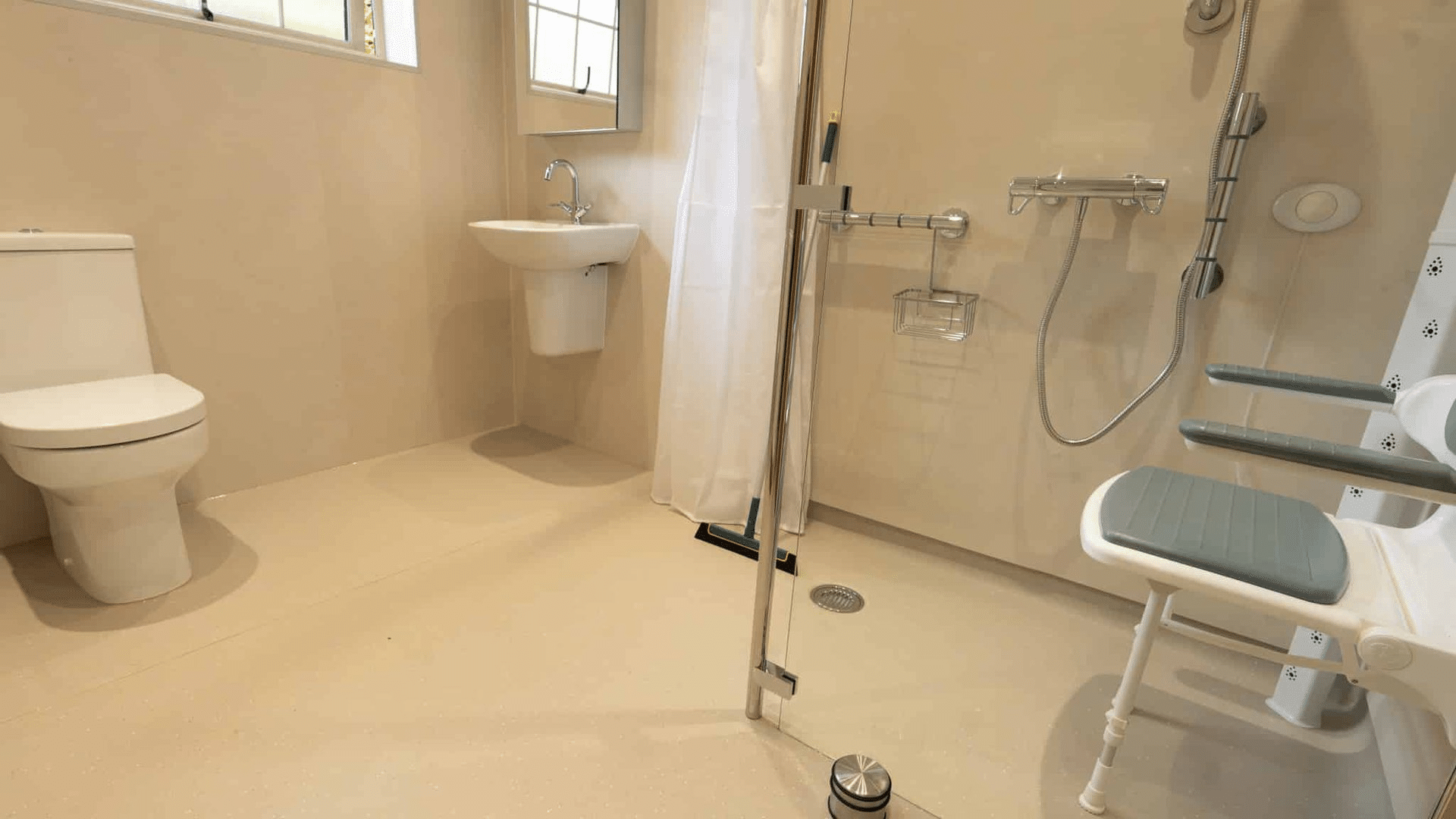
A wet room is a bathroom that has been completely waterproofed, a process known as tanking, with an open, level floor and no shower tray or step. The whole room becomes the showering area, and the floor is laid with a gentle slope so water drains away on its own.
Because every surface is sealed, water can go anywhere without causing damage, which makes wet rooms easy to clean, great for making smaller bathrooms feel bigger, and completely free of anything to step over. For a deeper look at how they work, our full guide to wet rooms for people with disabilities will help!
That is what makes a wet room different from a walk-in shower, which still uses a low tray or an enclosed showering area. In a wet room, the floor runs level from the door to the drain in one continuous surface. Many people add a glass panel to keep spray off the towels, but it is entirely optional.
Why are wet rooms so popular?
Wet rooms are popular because they suit two very different needs at the same time. For some households, they are simply a stylish, practical upgrade. For others, they are the safest possible way to bathe. Few home improvements manage both as successfully as a wet room.
The AMA Research market report on wet rooms found that installations in existing homes are growing consistently, with people choosing the wet room as a modern, accessible feature, and that housebuilders now add wet rooms to new properties because they add value. An aging population is part of the picture too, with more households looking for bathrooms that are easy and safe for everyone to use.
It is easy to see the appeal. A wet room’s open, level layout makes even a modest bathroom feel bigger, and because there is no step and nothing to climb over, a wet room naturally feels safer, with space for a wheelchair or a helping hand if it is ever needed. It is a bathroom that quietly future-proofs your home.
Wet rooms are not perfect for every home, though, and it is worth being aware of all of the positives and negatives. Our guide to the pros and cons of a wet room covers both sides.
So what does the installation of one actually cost? Let’s get to the numbers!
How much does a wet room installation cost?
A standard wet room installation in the UK typically costs between £4,000 and £12,000, with industry guides such as Checkatrade putting the average at around £8,000. At Age Care Bathrooms, our mobility wet rooms start from £10,000, fully designed uniquely for you and installed by our own team.
Those two figures measure different things, and the difference matters when you compare quotes. The market range covers a general tradesperson converting a bathroom into a wet room: the tanking, drainage, flooring and shower, with the final bill shaped to your room’s size, the materials you choose, and labour, which Checkatrade puts at £200 to £300 per day. These are ballpark averages, and prices vary by region and spec.
Our from £10,000 price is for something much more complete: a mobility wet room designed around you, with the home visit, the 3D design, all products, the safety features and the installation included in one fixed quote. There are no hidden extras, and if you’re eligible, you will be VAT exempt, which we’ll come to shortly.
| Type of wet room installation | Typical cost |
|---|---|
| Standard wet room (general tradesperson, supply and fit) | £4,000 to £12,000, averaging around £8,000 |
| Mobility wet room by Age Care Bathrooms (design, all products and installation in one fixed quote) | From £10,000 |
So why does a mobility wet room cost more than a standard one? The answer comes down to what goes into it, which we’ll break down next.
Try our wet room cost calculator
Head to our accessible bathroom pricing guide to understand how much a wet room installation will cost with our team.
Why does a mobility wet room cost more than a standard one?
A mobility wet room costs more because it is designed and built around a person, not just a room. Every wet room needs tanking, drainage and a new floor. A mobility wet room adds safety features, stronger fixings and far more precise design work on top, and each of those carries a real cost.
It starts under your feet. A mobility wet room must be completely level from the door to the drain, with gradients accurate enough that water drains away while a wheelchair rolls through and a walking frame sits steady. The flooring itself must be a specialist slip-resistant surface chosen for grip when wet, rather than whichever looks nicest.
The adaptations and support used has big importance. A fold-down shower seat and grab rails have to hold a person’s full weight, so the walls behind them are reinforced before they are fixed, and they are positioned exactly where a person needs them, at their height and reach, not just where they fit in the room. Thermostatic controls are also very common in a mobility wet room installation that stop the water from ever running dangerously hot, easy-turn lever taps, and often wider doorways are put in to help with turning space for a wheelchair user, as an example. All of this may require installation, including moving original fixtures or existing plumbing.
The main purpose of a mobility wet room vs a standard one is to measure around a person’s mobility, their reach and how they bathe day to day, so every feature lands in the right place the first time.
| Feature | Standard wet room | Mobility wet room |
|---|---|---|
| Floor and access | Open, level showering area | Precision level access, safe for wheels and walking aids |
| Flooring | Chosen mainly for looks | Slip-resistant safety flooring, chosen for grip |
| Seating and rails | Rarely included | Fold-down seat and grab rails on reinforced walls |
| Controls | Standard shower and taps | Thermostatic anti-scald shower, easy-turn lever taps |
| Space and layout | Existing layout usually kept | Wider access and turning space where needed |
| Design | Room-led | Person-led, designed around your mobility and reach |
None of these extras is bolted on at the end. They are the reason an accessible wet room does its job and why it costs more to install properly than a standard wet room.
What affects the cost of a wet room installation?
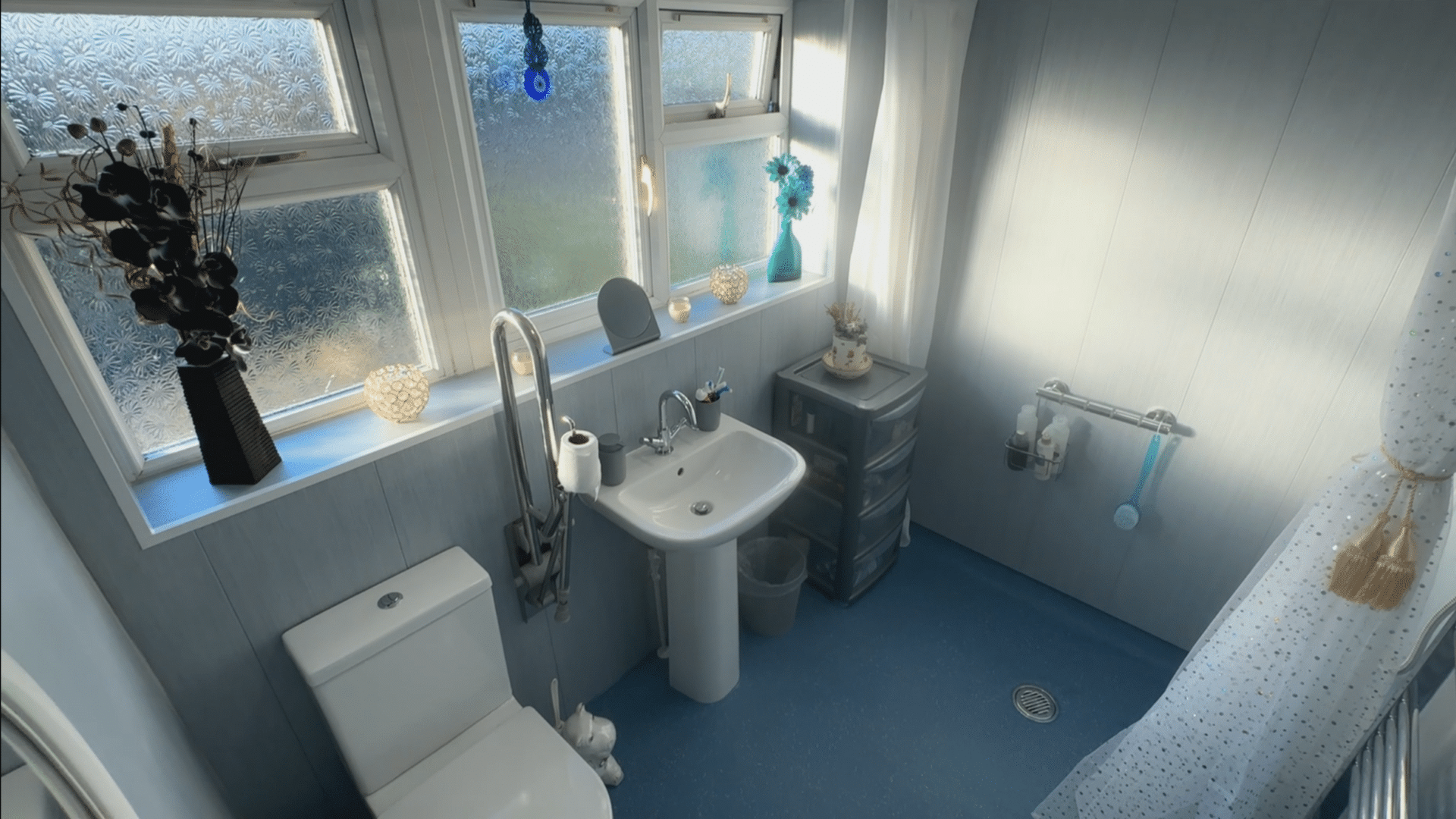
For our team, five things shape the final cost of a wet room more than anything else: the size of the room, where it is in your home, the materials you choose, any structural work, and who installs it. Let’s go through these…
- The size of the room. A larger bathroom needs more tanking, more flooring and more days of labour, so cost rises with floor area. Small rooms are often quicker and cheaper to convert, though a very tight space can need smarter design to work properly.
- Where the room is. Ground-floor rooms with easy access to drainage are the simplest. Fitting a wet room upstairs is absolutely possible, but the floor structure and drainage need more careful work, which can add cost. Our guide on having a wet room upstairs explains what’s involved.
- Materials and finishes. Traditional tiling is slow to lay, and every extra day of labour adds cost, which is one reason we don’t tile at all. Our wet rooms are fitted with waterproof wall cladding instead: much quicker to install, far easier to keep clean with no grout lines to scrub, and available in a wide range of finishes, including styles that give you the look of tiles without the upkeep. On the floor, your choice of slip-resistant safety flooring shapes the price, from practical safety vinyl through to more premium finishes.
- Structural work. Moving plumbing, widening a doorway, reinforcing the floor or improving ventilation all add labour and materials. Not every home needs them, and a proper survey tells you before any work begins, never after.
- Design details. Even smaller choices play a part, like built-in niches and smart wet room storage that keep the open space clear and easy to move through.
- Who installs it? A wet room brings together plumbing, electrics, waterproofing and flooring, and the price of that skill varies. A quote built on subcontractors can grow as the job passes between trades. Ours doesn’t, because everything is done by our own employed team, which brings us to what’s actually included…
What’s included when Age Care Bathrooms installs a wet room?
Everything. When we say our wet rooms start from £10,000, that is the complete project: the design, all products supplied, the installation and the clean-up, in one fixed quote with nothing hidden. Here is how it works, step-by-step:
- A free home visit. We come to you, measure the bathroom properly, and listen. Your mobility, your routine, what you find difficult now and what you’d love instead. There’s no pressure and no obligation at any point.
- A 3D design of your new wet room. Our in-house design team turns those measurements and wishes into a realistic 3D render, so you can see exactly how your wet room will look before you decide on anything.
- You review it and change whatever you like. The layout, the colours, the features, and where the seat and rails sit. We keep refining the design until it is right for you.
- No work begins, and no payment is taken, until you’re happy. You’ll have a clear, fixed price alongside your finished design, and the decision stays yours, made in your own time.
- Installation in 3 to 5 days. Every wet room is fitted by our own employed, DBS-checked team, never subcontractors. Before any work starts, we confirm exactly how many days yours will take, and you’ll have a working toilet for almost all of the installation. When we leave, the mess leaves with us, old bathroom included.
Even after the installation is complete, we don’t disappear. Our support team is a phone call away long after the silicone has dried.
Can you get support with the cost of a wet room?
Yes. Depending on your circumstances, there are three main forms of help with the cost of a wet room: VAT exemption, flexible finance, and local council grants.
VAT exemption
If you are an older adult or a person with disabilities, or living with a long-term illness, and the wet room is for your own home, you will be VAT exempt on the qualifying products and installation under HMRC rules. In plain terms, you will not pay the 20% VAT on that part of the work. It is not a discount or a limited offer, simply relief you may already be entitled to, and you can check your eligibility in a couple of minutes with our VAT exemption checker. If you qualify, we can guide you through it honestly.
Flexible finance
Finance is available for our accessible bathroom design and installations, and it is always entirely optional. You can see how it all works on our ways to pay page.
Disabled facilities grants
Some households can get means-tested support from their local council towards home adaptations, including wet rooms. One thing to know before choosing this route: the process involves assessments and council approval, and it often takes many months from application to decision, from our experience, so it can mean a long wait for a bathroom you may need a lot sooner. Our disability bathroom grants guide explains how the grants work, who may qualify, and what to expect.
How much does a wet room installation cost? A summary:
- A standard wet room installation in the UK typically costs £4,000 to £12,000, with industry guides putting the average at around £8,000.
- Mobility wet room installations by our team start from £10,000, with the design, all products, installation and clean-up included in one full price.
- A mobility wet room costs more than a standard one for good reason. Precision-level access, slip-resistant safety flooring, reinforced walls for seats and grab rails, anti-scald controls and person-led design all go into the price.
- Around 8% of UK homes now have a wet room, and their easy-clean, step-free design suits stylish upgrades and accessibility needs alike.
- The final cost depends on your room. Size, location in the home, materials, and any structural work all move the price, which is why a proper home survey matters.
- You will be VAT exempt if you’re eligible; flexible finance is available and always optional, and council grants exist but can take many months.
- Every Age Care wet room starts with a free home visit and a 3D design, and no work begins and no payment is taken until you’re completely happy.
Our commonly asked questions about wet room installation costs
Are wet rooms expensive?
Wet rooms are a mid-range home improvement rather than a cheap one. A standard installation typically costs £4,000 to £12,000 in the UK; our fully designed and installed mobility wet rooms start from £10,000 with everything included. The price reflects genuine specialist work, full waterproofing, precise drainage and skilled fitting, and if you are eligible, you will be VAT exempt, which brings the cost down by 20%.
How long does it take to install a wet room?
Our wet room installations take between 3 and 5 days, depending on the size of the bathroom and the work involved. We confirm exactly how many days it will take before any work begins, and you will have a working toilet for almost all of the installation.
Do I need planning permission for a wet room?
No, you do not usually need planning permission to convert an existing bathroom into a wet room. Some of the work, such as drainage and electrics, must meet building regulations, and our team takes care of that compliance as part of every installation.
Is a wet room suitable for a small bathroom?
Yes, a wet room is often the ideal choice for a small bathroom. Removing the shower enclosure and tray, or a standard bath, frees up floor space and makes the whole room feel bigger and easier to move around.
Do wet rooms add value to your home?
Yes, they can. A well-fitted wet room can add value to your home. Housebuilders now install them in new properties for exactly that reason, and their step-free, easy-clean design appeals to buyers of every age, which also makes your home more future-proof.
Ready to discuss what a wet room installation costs for you?
If you’re weighing up a wet room for its looks, its safety, or both, the surest next step is a free home visit. We’ll measure your bathroom, listen to what you need, and turn it into a 3D design with a clear, fixed price attached, so you can see exactly what your wet room would look like and cost before deciding on anything. The decision stays yours, made in your own time, in the home you love.
To book a free home visit, simply talk your options through with our team today on 0800 999 8994, or fill out the form below!