 Skip to content
If your bathroom feels short on space, you’re far from alone. In a 2025 UK survey, nearly four in ten renovated bathrooms measured under five square metres. In a room that size, every choice has to earn its place, and a walk-in shower is one of the best ways to make a small bathroom feel bigger, look fresher, and become far safer and easier to use, especially for older adults.
It’s why they’ve become such a popular refurbishment choice. By removing bulky enclosures and high steps, a walk-in shower opens the room up, gives it a clean, modern finish, and makes daily showering simpler and more secure for anyone with reduced mobility.
To help you picture the possibilities for your home, here are ten walk-in shower ideas suited to smaller spaces, each with a note on why it works and who it suits best. Further down, we look at why walk-in showers are such a good fit for elderly users, the showers we install, and what our team recommends.
Contents
How Big Is the Average UK Bathroom?
Most UK bathrooms are small to medium-sized, usually under 10 square metres. As a rough guide, bathrooms tend to be grouped into three sizes: small (under around 6 square metres), medium (around 6 to 10 square metres), and large (over 10 square metres). The same 2025 survey from above found that roughly eight in ten renovated UK bathrooms measured under 10 square metres, so the majority of homes sit firmly in that small-to-medium range.
In a compact room like this, every fitting needs to be carefully considered. That’s why a walk-in shower is a very practical choice for a smaller bathroom: it frees up floor space while allowing safe, comfortable access, which is exactly what the ideas below are designed to do!
Our Team’s 10 Walk-In Shower Ideas for Small Bathrooms
Choosing the right walk-in shower for a small bathroom comes down to the details: the door (or lack of one), the shape, the position, and the features that make it safer to use.
Here are ten ideas to consider:
1. Corner Walk-In Showers with Frameless Glass Panels
A corner walk-in shower tucks the whole showering area neatly into one side of the room, making the most of a spot that often goes unused. Frameless glass panels then keep everything feeling open: with no bulky frame or solid screen to break up the view, even the smallest bathroom looks larger and brighter. They’re the most popular shower layout in UK homes, according to Houzz’s UK study, and they suit tight, square rooms really well. For older users, the clear glass allows for clear sightlines and nothing chunky to move around.
2. Sliding Glass Doors
A sliding glass door saves valuable space because it runs along its track rather than swinging out into the room like a hinged door. That makes it ideal for corner showers or recessed spaces that would otherwise be hard to use. The sliding door keeps water contained, which is important in a smaller bathroom. It is also a more practical option for anyone with limited strength or mobility, as there’s no heavy door to pull; instead, it is an easy, gentle glide to then step through.

3. Curved Walk-in Shower Enclosures
Curved panelling can claw back a few precious inches next to the sink or toilet, while giving the whole room a softer, less boxy feel. The rounded shape is easier to clean as well, with no tight corners for mould and grime to gather. The streamlined design is often more affordable than larger, intricate enclosures. For older people, that easy-clean finish means less upkeep, and the absence of sharp corners makes the space a little safer to navigate.
4. Wet-Room Style (Level-Access) Walk-In Showers
Turning the bathroom into a wet room is one of the most effective ideas of all, especially for the elderly. With fully panelled, waterproofed floors and walls, the shower area blends seamlessly into the rest of the bathroom, and the most important part, there is no step or tray to climb over, only smooth level access from the door to the shower. It’s exactly why low-threshold and level-access showers are among the fastest-growing choices in UK bathrooms. The seamless look works beautifully in older and newer homes, and it removes the trips and edges that make showering more risky for older adults. You can find out more in our guide to wet rooms for the elderly.
5. Built-In Shower Niches
A built-in niche is a recessed shelf set into the shower wall, and it solves the storage problem that small bathrooms very often have. Instead of cluttered corners or wobbly caddies, your shampoo, soap, and toiletries sit tidily and within reach, and the recessed design keeps everything off the floor. Paired with contrasting walling or LED lighting, it adds a smart, elegant touch too. For an elderly user, having everything to hand at the right height means less bending, stretching or reaching while standing on a wet floor.

6. Half-Wall Shower Screens
A half-wall shower screen is a short, fixed panel that divides the shower from the rest of the room without enclosing it completely. It gives you the open, easy access of a walk-in shower with a little added privacy and useful splash protection. In a small bathroom, that part-open design keeps the room feeling airy and uncluttered while still keeping water where it belongs. For older adults, there’s no full door or narrow gap to negotiate, just a clear, step-in space, with a solid panel alongside you as you step in.
7. Walk-In Shower and Bath Combinations
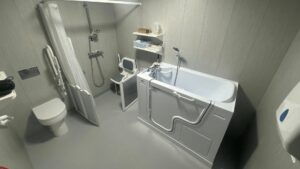
If you’re not ready to give up a bath altogether, a shower and bath combination keeps both in a single, space-saving footprint. These designs pair a compact walk-in bath with a shower included, so you get the practicality of a shower alongside the option of a relaxing soak without needing the room for two separate fittings in the bathroom. It suits households with mixed needs, or anyone who still enjoys a bath from time to time. One honest note for elderly users: showering over a bath, although a seat will be included, still requires stepping over, albeit a low-threshold step. If mobility is the main concern, a level-access shower will be easier and safer. Read our recent post about compact walk-in baths for further information!
8. Floating and Fold-Down Shower Seats
A floating, wall-mounted shower seat adds a secure place to sit without taking up floor space. For older adults, being able to shower seated rather than standing makes the whole routine safer and a lot less tiring; it is an invaluable addition for anyone who can’t stand for long periods of time. A fold-down version will fold flat against the wall when it isn’t needed, keeping a small shower completely clear for everyone else. Paired with slip-resistant flooring, it delivers comfort and stability without sacrificing space.

9. Built-In Grab Rails and Support Handles
Well-placed grab rails are one of the most important additions to any walk-in shower, giving a firm handhold exactly where it’s needed: stepping in, while standing, and when sitting down or rising. The trick here, and what our team recommends, is to design them in from the start rather than adding them later, as a rail chosen in a finish that matches the rest of the brassware looks intentional and modern rather than clinical. Positioned by the entrance and within the showering area, they make a huge difference to the confidence and safety of the elderly. Our guide on bathroom grab rails covers all you need to know.
10. Slip-Resistant Flooring and Thermostatic Controls
Two features do a lot of quiet work in a safe walk-in shower: slip-resistant flooring and a thermostatic shower valve. Specialist anti-slip flooring keeps your footing secure even when the floor is wet, which matters a lot around the shower, where slips are common. A thermostatic valve holds the water at a steady, preset temperature and guards against sudden scalding bursts. Together, they make a walk-in shower far safer to use every day, especially for those with mobility challenges.
Our 10 Walk-In Shower Ideas Compared
| Idea | Best for | Key Benefits |
|---|---|---|
| 1. Corner shower, frameless glass | Tight, square rooms | Uses an unused corner; open, larger feel |
| 2. Sliding glass doors | Corners and recesses | Saves space; no door to pull open |
| 3. Curved enclosure | Freeing space by the sink or toilet | Softer shape, easy to clean, good value |
| 4. Wet room-style (level-access) | Older or less mobile users | Completely step-free, safest access |
| 5. Built-in shower niche | Storage in a small bathroom | Toiletries to hand, less clutter |
| 6. Half-wall shower screen | Privacy without enclosing the space | Open access with splash protection |
| 7. Shower and bath combo | Households wanting both | Shower and soak in one footprint |
| 8. Floating or fold-down seat | Those who can’t stand for long | Safe seated showering; folds away |
| 9. Built-in grab rails | Confidence stepping in and moving | A firm handhold exactly where needed |
| 10. Slip-resistant flooring and thermostatic controls | All older or less steady users | Secure footing and scald protection |
Why Are Walk-In Showers Good for the Elderly?
Walk-in showers are good for the elderly because they remove the steps, high sides, and tight enclosures that make a standard bath or shower hard and risky to use, letting older adults wash safely, comfortably, and with far less help.
The main benefits include:
- Safer, step-free access: the bathroom is one of the most common places for a fall at home, and a low-threshold or level-access walk-in shower removes the high bath side or tray edge behind many trips and slips.
- The option to sit: a fitted or fold-down seat means showering can be done sitting down, which is safer and far less tiring for anyone who can’t stand for long or has poor balance.
- Easier everyday use: with no door to climb over and simple, reachable controls, daily showering becomes something an older person can manage themselves rather than something to dread or put off.
- Greater independence and dignity: being able to wash without relying on a partner, carer, or family member helps older adults keep their privacy and independence at home for longer.
- Simple to clean: open, level designs with fewer nooks and edges are quicker and easier to clean, which matters when bending and scrubbing become harder.
If you’re looking specifically for walk-in showers designed around a disability or for a wheelchair user, our guide to disabled showers covers this in more detail!
The Walk-In Showers We Install (and Why They Suit the Elderly)
Every walk-in shower we install is designed around safe, easy showering, with the features that matter most for older adults built in if our customers require them, rather than costly extras.
All of our walk-in shower installations can include:
- A low-threshold, anti-slip tray. Our trays start from just 40mm, so there’s barely any step to climb over, and the slip-resistant surface keeps footing secure when wet, exactly where falls are most likely.
- A thermostatic safety shower. This feature holds the water at a steady, preset temperature and prevents scalding bursts, an important safeguard for older skin and anyone with sensitivity to heat. Electric options are also available.
- A comfortable, fitted shower seat. Showering seated is safer and far less tiring. We fit sturdy options to suit different needs and weights.
- Watertight wall panelling. Fully sealed, easy-clean panels that keep the room dry and low-maintenance.
Our customers can also choose the screen that suits them best, from a full-height glass panel for maximum splash protection to a half-height or bifolding screen that makes stepping in, or a carer helping, much easier.
For those who need to remove the step entirely, our mobility wet room installations go further, with a fully waterproofed, completely flat floor.
All of our walk-in showers and features can be viewed through our free brochure, which you can view by clicking the button below!
What Does a Walk-in Shower Cost for a Small Bathroom?
A walk-in shower from Age Care Bathrooms starts at £8,500, fully fitted. The final figure depends on the size of the room, the design you choose, and the features you’d like to add. We always set everything out clearly in your free, no-obligation quote, so there are no surprises. Our guide to how much a walk-in shower costs sets out the full picture.
We help many of our customers through the VAT exemption process, which removes the 20% VAT on qualifying work for those with a long-term illness or disability, and we offer flexible finance options that help spread the cost. You can see the full range of options on our Ways to Pay page.
Walk-In Shower Ideas for Small Bathrooms: A Summary
A walk-in shower is one of the best ways to make a small bathroom safer, more spacious and easier to use, particularly for older adults.
Here’s a recap of what we’ve gone through:
- Ideal for small bathrooms: With most UK bathrooms under 10 square metres, a walk-in shower frees up floor space and opens the room up by removing bulky enclosures and high steps.
- Ten ideas to suit your space: from corner showers and sliding doors to level-access wet rooms, fold-down seats and built-in grab rails, there’s a design for every layout and need.
- Great for the elderly: step-free access, the option to sit, and simple controls make daily showering safer, easier and more independent.
- Safety built in: our walk-in showers come with a low 40mm anti-slip tray, a thermostatic safety shower, and a fitted seat, if requested by our customers.
- Cost: a walk-in shower starts from £8,500 fully fitted, with VAT exemption and finance available to support.

Frequently Asked Questions (and Our Team’s Answers!)
What’s the best walk-in shower for an elderly person?
The best walk-in shower for an elderly person is a level-access design with little or no step, paired with a fitted seat, well-placed grab rails, slip-resistant flooring and a thermostatic valve. Together, these let an older person shower seated, steadily and safely, with no high tray to climb over and no risk of a sudden scalding burst of water.
How often should an elderly person bathe?
There’s no single rule, but most older adults should bathe at least once or twice a week to stay clean, comfortable and protected against skin infections. Daily showering usually isn’t necessary, and the right frequency depends on the person’s health, mobility, and preferences, with some needing to wash more often, for example, with certain skin conditions or incontinence. Our guide on how often seniors need to bathe looks at this in more detail.
What can you use instead of shower doors?
Plenty of options work better than a traditional hinged door, especially in a small bathroom. A fixed glass panel or half-wall screen, a space-saving sliding door, or a fully doorless walk-in design (a wet room) all make stepping in easier and keep the room feeling open.
Can a walk-in shower work in a small bathroom?
Yes, and it’s often the ideal choice. By removing bulky enclosures or a separate bath, a walk-in shower frees up valuable floor space and makes a small bathroom feel much bigger, while providing safer, more comfortable access.
Find the Right Walk-In Shower for Your Small Bathroom
Whatever the size of your bathroom, the right walk-in shower can make it feel more spacious, look fresher, and above all, be safer and easier to use for years to come. The best design is always the one shaped around your space and your needs.
At Age Care Bathrooms, we design and install accessible walk-in showers and wet rooms for older adults across England and Wales. From a free home design visit and a custom 3D design through to expert fitting by our own employed team, we handle everything, and we’ll only ever recommend what genuinely suits you.
To talk through your ideas, call our friendly team on 0800 999 8994 today, or fill in the form below to book in a free consultation!