 Skip to content
Bathroom adaptations after a hip or knee replacement don’t have to be complicated, but they do need to suit you. Whether you’re waiting for your operation or you’re already home and finding the side of the bath too high to step over, the bathroom is often the first room people think about.
A new hip or knee is there to help you move more easily, and as you recover, everyday things usually get easier too. Many are able to use their bath again once they’ve healed. So why do people choose to change their bathroom? For some, it’s to make the weeks of recovery easier. For others, the bath was already a struggle before the operation, or they’d like a bathroom that’s easy to use for years to come.
Some of the people who contact our team are washing at the sink until they can shower properly again. Often, it’s a husband, wife or grown-up child who gets in touch, arranging it for someone they love.
We’ve designed and fitted more than 600 bathrooms where the bath came out for a walk-in shower or wet room, so we know which changes make the biggest difference. In this guide, we’ll cover the changes that help most, when to plan them, the choice between a walk-in shower and a wet room, the right toilet height, and what it all costs.
Let’s begin!
Contents
Bathroom adaptations after a hip or knee replacement: at a glance
- What helps most:
- A walk-in shower in place of the bath, with a seat
- Also worth having:
- Grab rails, a handheld shower and a comfort-height toilet
- When to plan it:
- Before your operation, if you can
- Bathing after surgery:
- Follow your own hospital's advice
- Time to fit:
- Three to five days
Which bathroom changes help most after a hip or knee replacement?
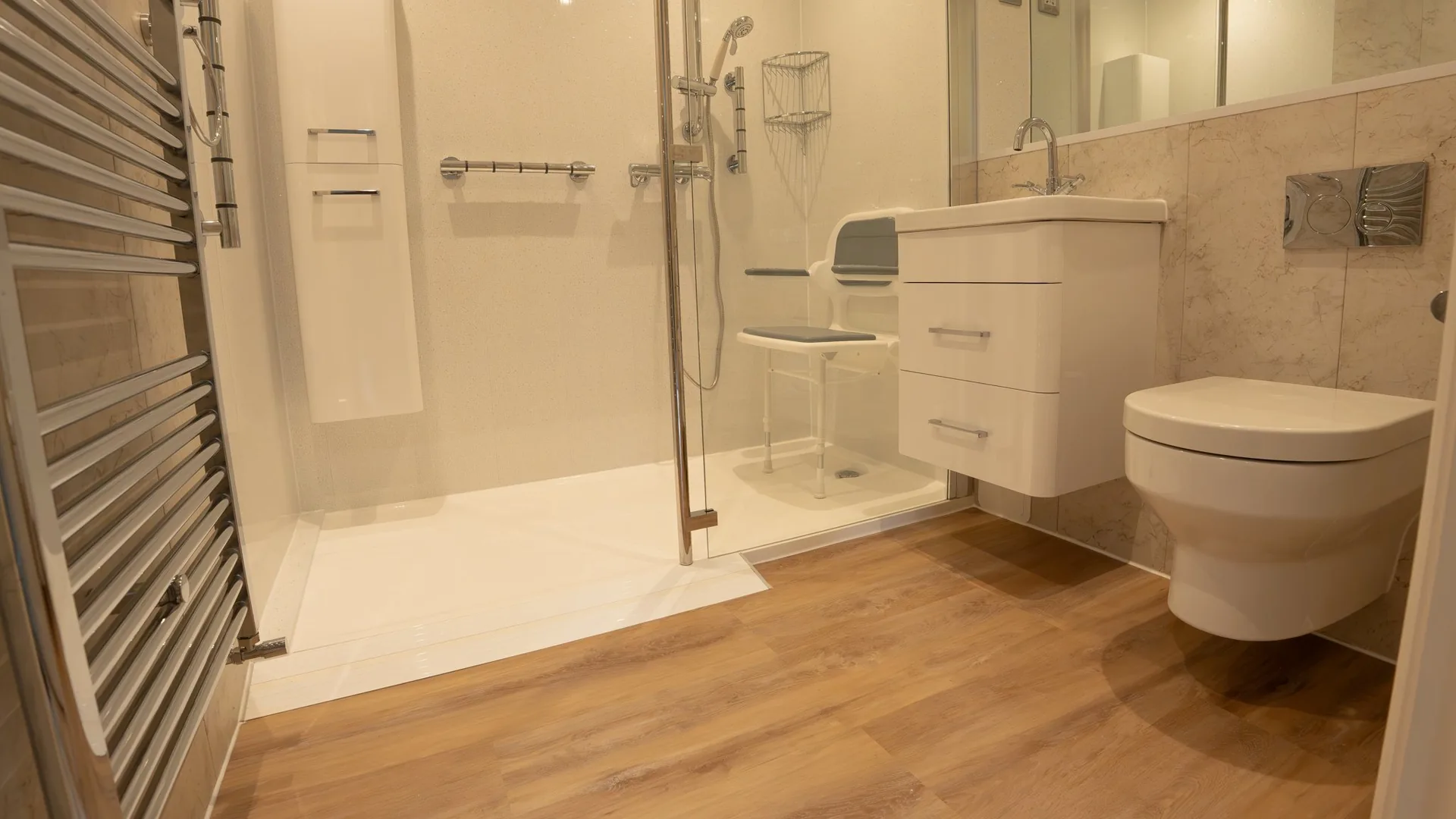
The changes that help the most after a hip or knee replacement are taking out the bath for a walk-in shower with a seat, installing grab rails where you sit down and stand up, and having a toilet at a comfortable height. Together, they remove the two hardest parts of using a bathroom with a new joint: stepping over the side of a bath, and lowering yourself onto a low seat.
After a hip replacement, the NHS advises against bending your hip past 90 degrees or sitting on a low toilet seat. After a knee replacement, hospitals such as Frimley Health advise against stepping into a bath on your own or sitting down in it, and against leaning forward to wash below your knees.
These are the changes we recommend most often, too. When we quoted for three customers waiting for, or recovering from, a hip replacement, all three designs included a shower seat, grab rails and a handheld shower. Two included a comfort-height toilet; the third kept their existing one.
Across the 618 bathrooms where we’ve taken out a bath for a walk-in shower or wet room, here’s how often each feature or support fixture was included:
| Change | Why it helps after hip or knee surgery | How often we include it |
|---|---|---|
| A seat in the shower | You can wash sitting down, without standing for long | 72% |
| Grab rails | Something firm to hold as you sit, stand and step in | 94% (usually two) |
| A pole or screen with a handhold | Support at the moment you step in | 27%, and rising |
| A handheld shower on a riser rail | You can rinse your legs and feet while seated, without leaning forward | 62% |
| A comfort-height toilet | Less bending when you sit down and stand up | 73% of new toilets |
| A thermostatic valve | The water can't suddenly run too hot | 68% |
| Non-slip safety flooring | Grip underfoot when the floor is wet | 83% |
| Wipe-clean wall panels | No grout to scrub, so no kneeling to clean | 98% |
Every home and every person’s recovery is different, so you may not need all of the listed adaptations in the table above. At a free home visit, our expert surveyors can discuss your requirements, how you wash and move around your bathroom, and suggest what will suit you. You can read more in our guides to grab rails, shower seats, and higher toilets if you’d like more information about those adaptations.
Should you plan your bathroom before or after the operation?
If you can, plan your bathroom before your operation so it’s ready when you come home, and the work doesn’t fall in the middle of your recovery. Recovering from a hip replacement can take several months, and having a bathroom you can use safely from day one makes those months easier.
Your hospital will often think about your bathroom before the operation too. Many occupational therapy teams check your home in advance: York and Scarborough Teaching Hospitals may ask you to fill in a home questionnaire that includes your furniture heights, and Frimley Health looks at the height of your toilet at the pre-operative assessment.
Two of our customers did exactly this. Both arranged a walk-in shower in place of their bath while they were still waiting for a hip replacement.
If your operation has already happened, it isn’t too late. Some people do prefer to wait until they’re home and moving more easily, and that’s absolutely fine. Most of our installations take three to five days, and we keep a toilet in place for the majority of the work, so the only time you’ll be without one is when we’re swapping it for your new one.
Whenever you’re ready, a free home visit is a no-pressure first step. We’ll measure up, talk through how you’ll be moving after your operation, and send over a 3D design of your new bathroom before you go ahead with anything, to make sure you’re completely happy.
Why is a bath so hard after a hip or knee replacement?
A standard bath for those with reduced mobility becomes a hard obstacle to overcome. Getting in and out, lifting your leg over the high side, then bending your hip and knee deeply to sit down are movements hospitals ask you to avoid while a new joint recovers. After a hip replacement, the NHS on their website advises against bending your hip past 90 degrees, and a standard bath takes a person well beyond that.
How long you’ll need to avoid the bath depends on your operation; advice can differ:
- Leeds Teaching Hospitals advises not getting into a bath or an over-bath shower for 12 weeks after a hip replacement.
- Frimley Health advises against stepping into a bath on your own after a knee replacement, or sitting down in it.
- Milton Keynes University Hospital notes that, after revision hip surgery, most people can’t use a bath board without bending their hip too far.
It’s important to always follow the advice your own hospital gives you.
For many people, the bath becomes usable again once they’ve recovered. But if stepping over it was already hard before your operation, or you’d simply rather not climb in and out of a bath again, taking it out for a walk-in shower is the permanent answer. We hear from people who’ve had both hips replaced and still find the bath a struggle, years later.
Walk-in shower or wet room: which suits you after surgery?
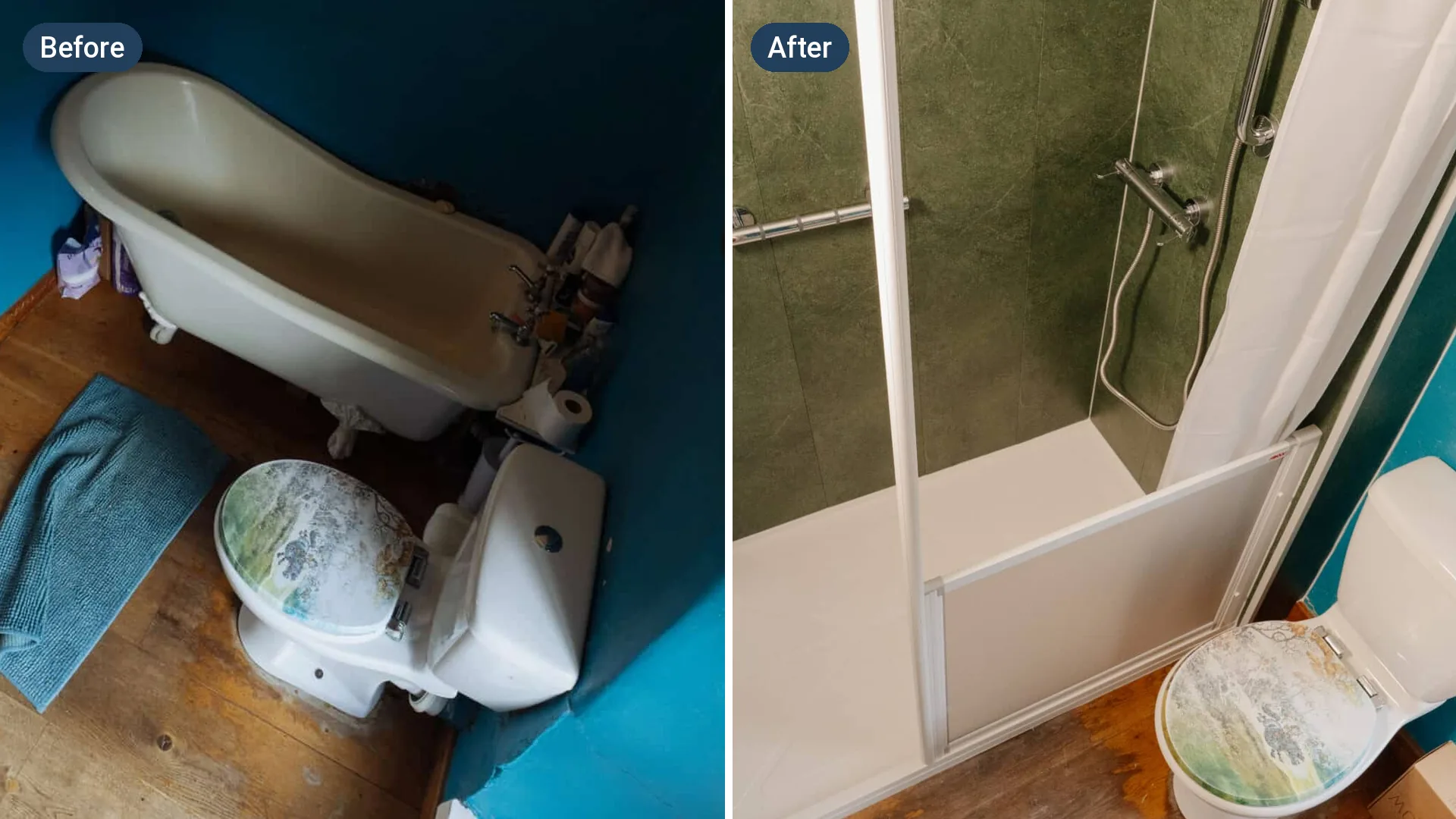
If you’re steady on your feet, a walk-in shower with a low step usually suits you best after a hip or knee replacement. A wet room’s completely level floor matters most if you use a wheelchair or a wheeled shower chair.
A walk-in shower also becomes usable much sooner than a bath. Leeds Teaching Hospitals advises that you can use a walk-in shower or shower cubicle once you’re confident standing without your elbow crutches, while a bath, as mentioned above, is off limits for 12 weeks.
Most of the people who’ve told us about a hip or knee replacement asked us for a walk-in shower in place of their bath. Most were still on their feet. Their problem was the height of the bath, not the ability to walk.
A level floor isn’t always better. When looking at our records, one of our customers with a recent knee replacement told us she’d liked a hotel shower with a slight step more than a completely flat floor. Another, after hip surgery, had stopped using her wet room because the gentle dip had become unsettling. A wet room’s floor slopes slightly towards the drain, and some people notice that underfoot.
No accessible bathroom is the same, and it is important to have a surveyor discuss options with you before suggesting anything. Our pages on walk-in showers and mobility wet rooms explain the differences in more detail if you’d like to find out more.
How high should your toilet be after a hip replacement?
Your toilet should be high enough that your knees sit lower than your hips when you sit down, so you don’t bend your hip past 90 degrees. The right height is different for everyone.
That’s why hospitals often measure it for you. Leeds Teaching Hospitals, for example, works out each patient’s “precautionary height” from the crease behind the knee to the floor, plus 2 inches (about 5cm), and checks the toilet, chair and bed against it. If your toilet is too low, the occupational therapists will provide toileting equipment after your operation. The NHS advises against sitting on a low toilet seat after a hip replacement. After a knee replacement, the height still matters, as standing up from a low seat is a lot harder with a stiff knee.
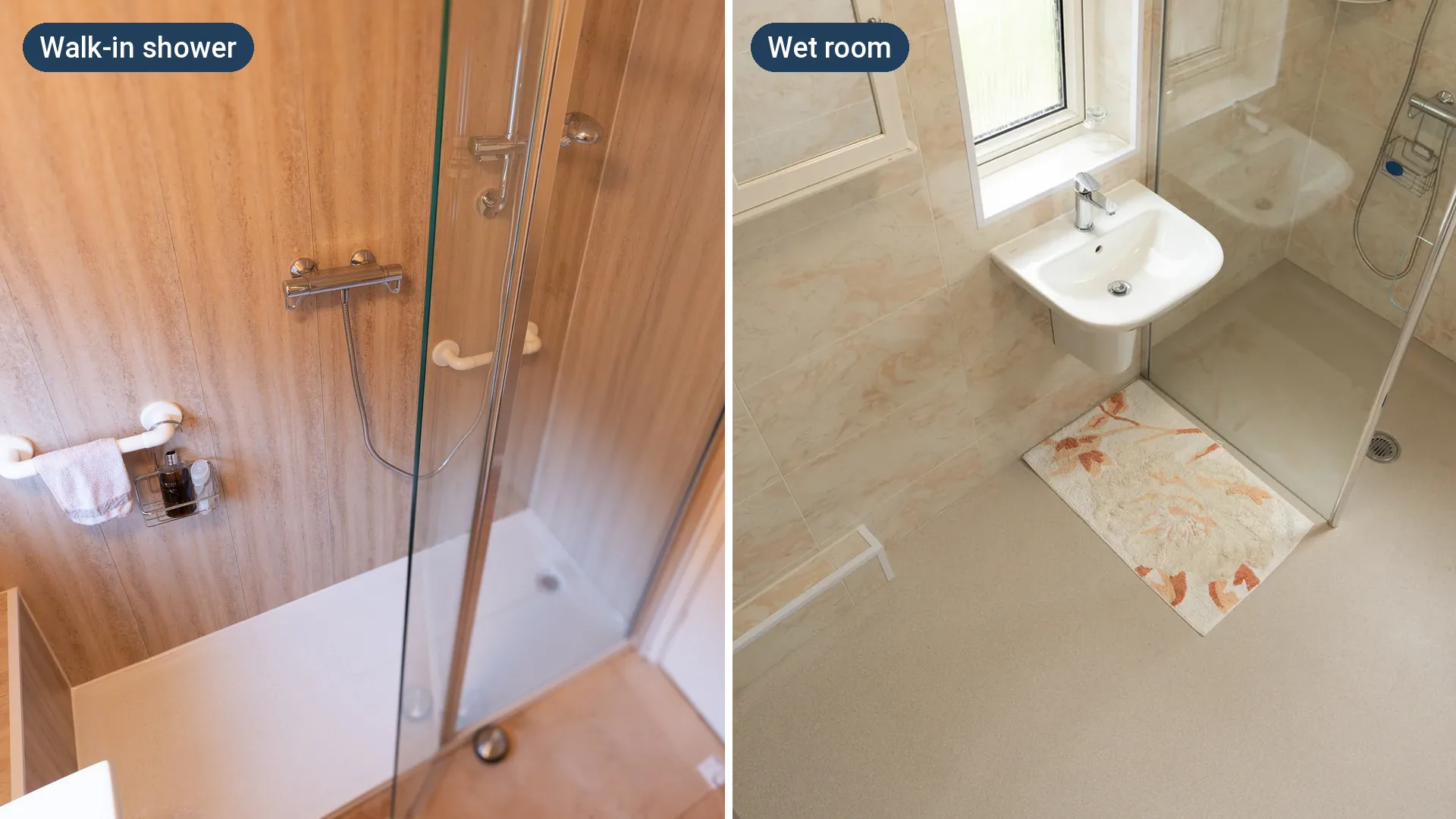
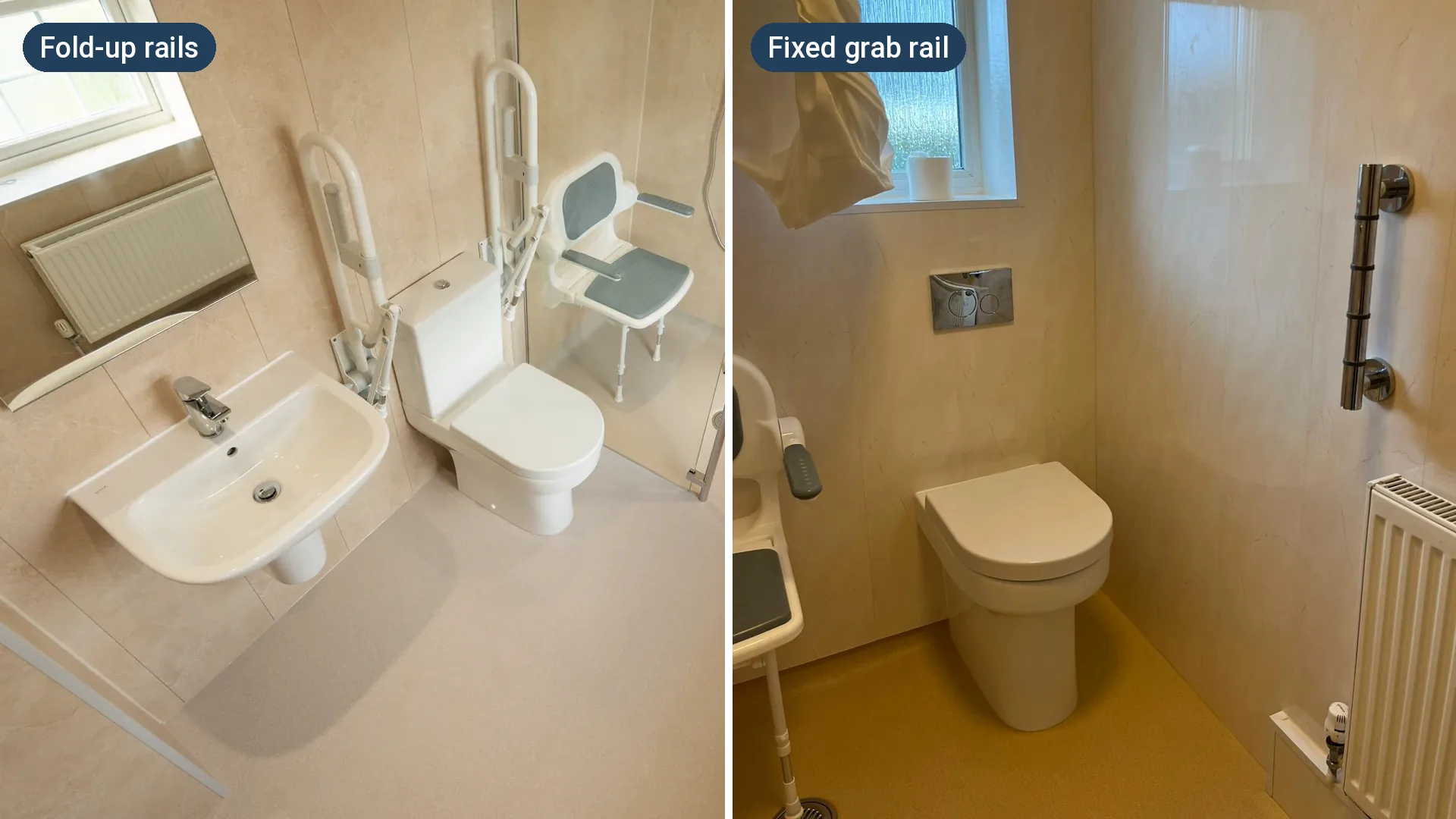
For the long term, a comfort-height toilet (rather than a standard toilet) is the permanent answer. When we fit a new toilet as part of taking a bath out, it’s comfort height nearly three times in four, and we set it at the right height for you. A grab rail beside it gives you something firm to push up from. Towel rails and radiators aren’t built to take your weight: the Disabled Living Foundation points out that heated towel rails aren’t designed to offer support. If reaching round is difficult, a wash-and-dry toilet is worth considering too.
What equipment does the hospital give you after a hip or knee replacement?
Your hospital may give you short-term equipment, such as a raised toilet seat or a toilet frame, to help you through the first weeks of recovery. It’s designed to get you safely through that period, while the changes we fit to your bathroom are permanent.
Raised toilet seats and toilet frames are among the most common pieces of equipment people go home with. In a UK survey of occupational therapists and physiotherapists, raised toilet seats were the most widely prescribed item after a hip replacement. The same survey found that advice on how long to use the equipment varied from six weeks to life.
This equipment does its job well during recovery. If you’re still relying on it months later, or the bath is still a struggle after a full recovery, that’s usually the point to think about a permanent change.
If you only need a single grab rail fitted, with no wider work, our sister company Age Care Maintenance can help.
How much does it cost to adapt your bathroom after a hip or knee replacement?
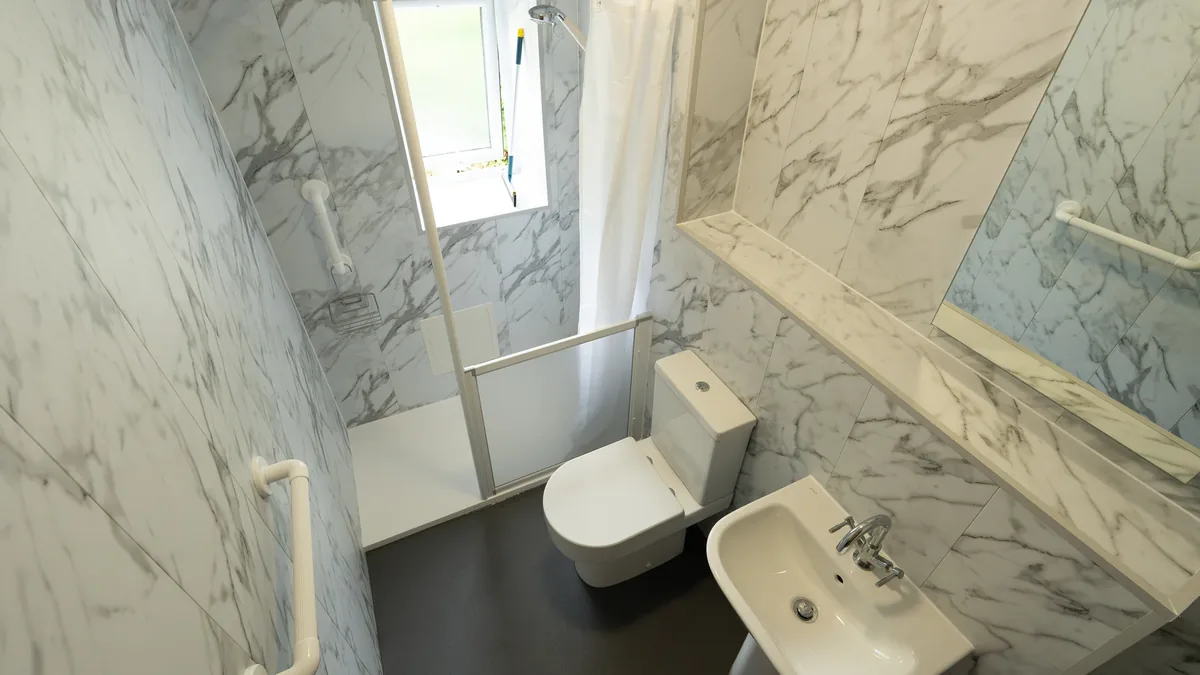
A walk-in shower in place of your bath starts from £8,500, and a wet room from £10,000, fully installed. Those prices cover the whole job: your new shower, supplied and fitted by our own employed team in three to five days, taking out and recycling your old bath, watertight wall panels and sealing, and full aftercare. Extras such as a seat or grab rails are priced separately, but fitting them is covered, and your quote is the price fitted, with no additional hidden costs afterwards.
These start prices are for customers who are VAT exempt; if you don’t qualify, you’ll pay up to 20% more.
Across the 618 bathrooms where we’ve taken out a bath for a walk-in shower or wet room, the middle price was £12,306, on the same VAT-exempt basis. Your own personal price depends on the size of your bathroom, any building work needed, and the extras you choose.
You can find more detail in our guide to walk-in shower costs and our ways to pay page.
Will you pay VAT?
You won’t pay VAT on qualifying work if you’re chronically sick or disabled, under HMRC’s VAT Notice 701/7. HMRC’s definition doesn’t include someone who is only temporarily disabled, so recovering from an operation doesn’t qualify on its own. If you live with a long-term condition that has a substantial effect on your everyday life, you may well be eligible.
If you’re 60 or over and don’t qualify, you’ll pay a reduced rate of 5% VAT on some items, such as grab rails and a shower with a built-in seat.
HMRC can’t tell you whether you personally are eligible, but our VAT exemption checker will help you check in a couple of minutes, and we’re happy to talk it through at your free home visit.
Bathroom adaptations after a hip or knee replacement: your questions answered
Will a walk-in shower still suit me once I've recovered?
Yes. A walk-in shower isn't just for recovery. The low step, a seat that folds away and grab rails where you need them make everyday washing easier for years to come, whether or not you still need the support.
Do I need to replace my toilet as well?
No, it's your choice. Some people keep their existing toilet. If we fit a new one when we take out your bath, it's usually a comfort-height toilet, set at the right height for you.
Can the work be done while I'm recovering?
Yes. Most installations take three to five days, and we keep a toilet in place for most of the work. We'll plan the timing around your operation and recovery, so the work happens when it suits you.
Ready to talk about your bathroom?
Whether your operation is weeks away or you’re already home, we’re here when you’re ready. Book a free home visit, and we’ll measure up, talk through how you’re moving, and design a bathroom around you, with no pressure to go ahead. Or call our friendly team free on 0800 999 8994.
We Cover the Whole of England & Wales
Our head office is in Chesterfield, Derbyshire, and our employed, DBS-checked installation teams travel right across England and Wales.
We don't currently cover Scotland, Cornwall, or the Plymouth and Torbay areas. Pop your postcode in below to check we can visit you.
- Free home visit
- No obligation
- Employed, DBS-checked fitters
Not sure? Call us free on 0800 999 8994 and we'll confirm.
Let's get you a free home visit booked in with one of our expert surveyors