 Skip to content
If getting in and out of the bath has become much harder, you are not alone, and there are plenty of aids and solutions that can help. It is one of the most common reasons why people get in contact with us, and the good news is that small changes can often make a real difference.
This guide goes through the practical aids that make bathing safer, from grab rails to bath lifts, what each one does, and where or who it can help the most. We will also look at the point where a few aids are no longer enough, and adapting the bathroom completely becomes the best, longer-lasting answer.
Whether you are looking for bathing aids for yourself or someone you love, our main goal is simple: to help you find the right solution for the home you love, with no pressure at any point.
Let’s get started!
How to get out the bath safely: key findings
- Aids help, but the room matters more. A grab rail or a bath step solves one difficulty at a time. Adapting the bathroom itself keeps working as your needs change.
- Grab rails are the most effective first step. They are part of nearly nine in ten of the bathrooms we complete, more than any other single change we make.
- A non-slip mat only covers the floor of the bath. The moment of highest risk is stepping onto a wet floor, so we fit non-slip flooring across the whole room instead.
- Most of our bathrooms are built around a level-access shower or wet room rather than a traditional bath, around eight in ten, because it removes the hardest part of bathing altogether.
- We have helped with a wide range of needs. From arthritis and balance problems to stroke and Parkinson's, we have spoken with people about 25 different conditions that number continues to grow.
Contents
What are bath aids?
Bath aids are pieces of equipment that make getting in and out of the bath easier and safer. Most will give you something sturdy to hold, a stable place to sit, or a way to lower the height you need to step over in a standard bathtub. When placed and used correctly, they add support, steady your balance, and take the worry out of everyday bathing.
Bathing aids range from small, low-cost items you can fit yourself, like a non-slip mat, or a bath transfer bench, to powered equipment such as a bath lift. Which one helps depends entirely on how much difficulty you are having, which is why it is important to understand what each does before you purchase one of them. As you continue through this guide, we’ll provide you with this information for each of the main bath aid options.
The main bath aids that help you get in and out of the bath
No two people need the same thing, so here are the aids that make the biggest difference from our experience in fitting accessible bathrooms. Below you’ll find what each bath aid does well, and what to weigh up before you buy.
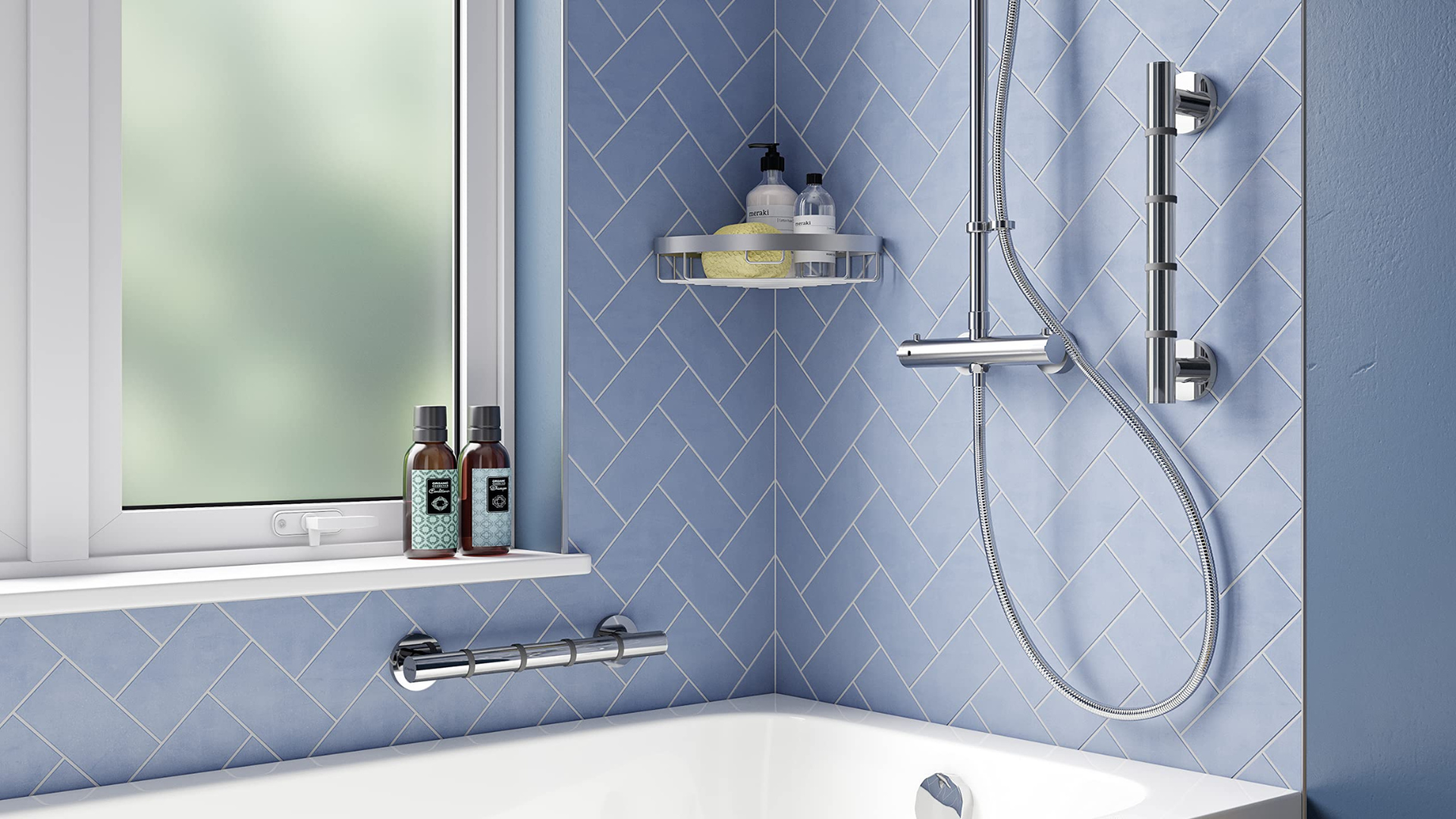
1. Grab rails
Sturdy handles fixed to the wall near the bath, giving you something solid to hold as you steady yourself, lower down, or stand back up. Simple, and one of the most effective changes you can add to your bathroom.
Good to know: it is important to fix grab rails into a wall that can take a person’s full weight, not screwed into plasterboard. The placement of the rails matters just as much as the specific rail you buy. Grab rails are the bath aid we fit most often during our mobility bathroom installations; they are part of nearly nine in ten of the bathrooms we complete, usually two per room, and positioned around how each person moves and uses their space. For more information, our guide to bathroom grab rails covers types and placement in detail.
2. Bath steps
A raised step that reduces the height you have to lift your leg to clear the side of the bath. A non-slip surface is essential so your footing stays secure during this movement.
Good to know: a step lowers the height, but it also adds an extra edge or “step” to negotiate, so it suits people who are steady on their feet but struggle with the lift, less so for people whose balance is the main concern.
3. Bath lifts
A powered seat that gently lowers you into the bath and raises you back up at the touch of a button or remote control. Most seats available to buy individually are battery-operated and don’t require any plumbing changes, so they can be fitted to your current bathtub.
Good to know: A bath lift lets you keep your bath and bathe seated, with much more support, but it takes up a lot of room in the tub, will require charging, and it has to be lifted out in order to clean it thoroughly. It is one of the more expensive individual aids, though still less than a full bathroom adaptation.
4. Non-slip bath mats
A rubber mat with suction cups that adds grip to the floor of the bath, reducing the chance of slipping when the surface becomes wet.
Good to know: A non-slip bath mat only protects the floor of the bath itself, and the moment of highest risk is usually stepping out onto the wet bathroom floor as you get out, where these mats cannot help. A mat can also become another trip hazard. This is why, across every bathroom we have fitted, we advise not to include one; instead, non-slip safety flooring across the whole bathroom is our preferred option for the people we support, so grip underfoot is everywhere, not just inside the bath. Our guide to non-slip bathroom flooring explains the difference.
5. Fold-away shower seat
A seat fixed to the wall near the bath that lets you sit safely before you move in or out, then folds flat against the wall to save space when it is not needed.
Good to know: It gives people a secure place to pause and transfer, which helps if standing for long is tiring. Like a grab rail, it needs a solid wall to fix to and enough space beside the bath to use it comfortably.
6. Adjustable-height bath stool
A stable stool you can set to the right height, giving you somewhere to sit inside or beside the bath while washing, rather than lowering all the way down.
Good to know: Useful if getting down to and up from the bottom of your current bath is difficult, but it does take up a lot of space in the bath. A bath stool works best in a standard flat-bottomed bath with room to stand it securely; other shapes that are narrow, curved or tapered are a problem, as the base of the stool can’t sit level and be stable.
7. Over-bath support frames
A free-standing frame that surrounds the bath edge to give a secure handhold on both sides as you step in and out, helpful where there is no wall on one side to fix a rail to.
Good to know: It offers support without any drilling, so it works in a rented home, but it is bulkier than a fixed rail and can feel like an obstacle in a smaller bathroom.
8. Floor-to-ceiling support pole
A pole fixed between the floor and ceiling that gives a firm vertical handhold to pull up on and steady yourself beside the bath. Adjustable versions fit without drilling.
Good to know: a good option where there is no suitable wall for a rail, though it relies on a sound floor and ceiling to fix against, and it needs to be positioned carefully so it is available to hand at the moment you need it the most.
The signs it may be time to look at adapting your bathroom
From experience helping many of our customers, we know that most people do not decide that they need more extensive adaptations to their bathroom overnight. This feeling tends to build over time, but there are a few signs worth paying attention to.
You may begin to notice that you are holding onto the sink or radiator to steady yourself, that stepping over the side of your current bath takes more effort than it used to, or that you have started to bathe less often as it has become too much. Sometimes it may be that a specific event, a fall or time in hospital, changes how you can manage every day.
None of the above should make you feel like you’re losing independence. With the right support in place, bathing stays something you can do safely and comfortably, still in the home that you love. The people who contact us deal with various circumstances, from arthritis and balance problems to strokes, Parkinson’s, reduced mobility and recovery after surgery, so whatever your situation, it is unlikely to be one we have not seen before.
The important thing is to match the solution to the level of mobility. A grab rail or two may be all that is needed during the early stages. As needs continue to change, a bath lift or a fuller adaptation may make more sense.
The section below looks at how to think about this.
Thinking ahead: Future-proofing your home bathroom
Individual bath aids are a good place to start, and for many people, they are great support for a long time. As specialists in accessible bathrooms, it is important for us to be honest about what they do, though. Most bath aids solve one specific difficulty, and they work best while your mobility needs stay consistent. If your mobility changes, an aid that once helped may no longer be enough, and you can find yourself adding multiple aids to a bathroom that may not be designed for any of them, causing clutter and potentially even more problems.
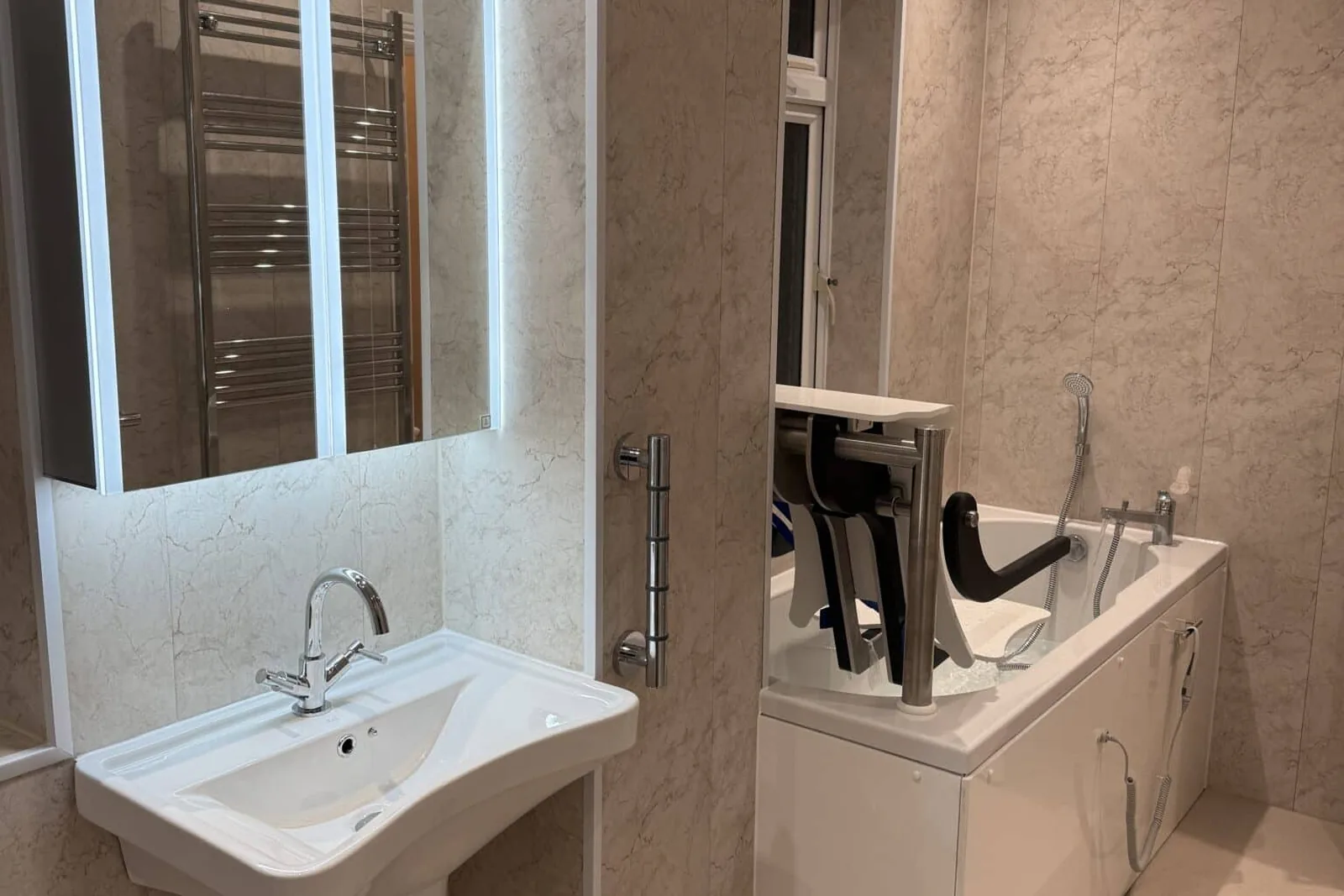
Adapting the room itself takes a different approach. Instead of working around the bath, it makes the whole space easier and safer to use, and it keeps working as your needs change. Various options are available, from a level-access shower you can walk or wheel straight into, a walk-in bath with a door rather than a high climb over the side, grab rails built into the design of the room from the start, and non-slip flooring throughout.
In fact, most of the bathrooms we fit are built around level access with a showering area or a full wet room rather than a traditional bath; this is because it removes the hardest part of bathing altogether.
Of course, there is a cost difference here, and it is a real conversation that our team have every day with people considering adapting their bathroom. A new walk-in bath or wet room is an investment to stay in your home for the long term. It is worth weighing this against how long an individual bath aid solution will keep working for you, and against other alternatives such as going into care.
We know that people would much prefer to stay in their own home, which is why we offer flexible finance options that make adapting the whole bathroom more manageable for many.
Walk-in baths: Allowing you to keep a bath in your home
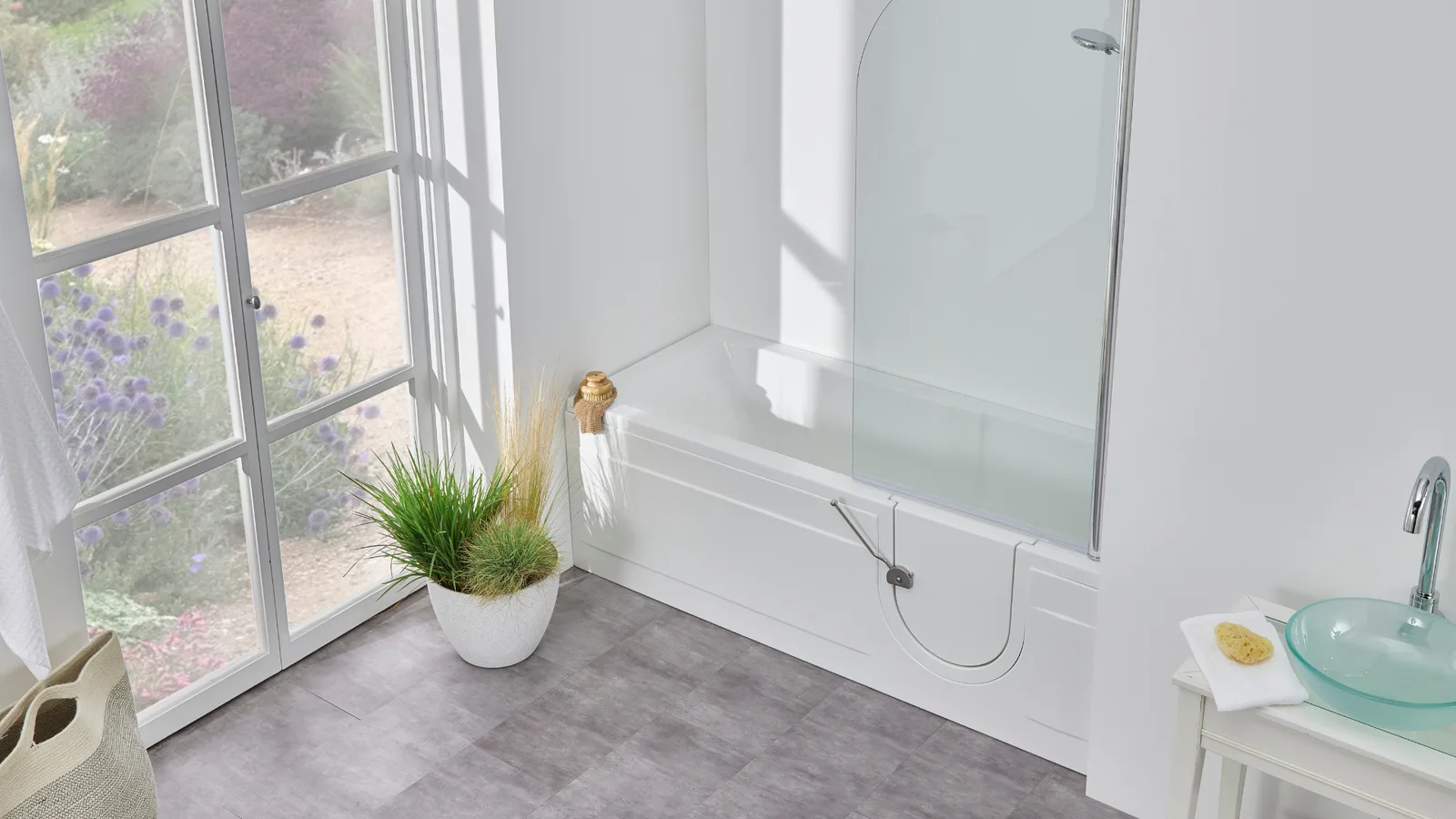
If you still would like the enjoyment of having a proper soak and do not want to give up a bath in your bathroom, then a walk-in bath lets you do just that. You step through a low, seated door into a deep bath you relax in, and many of the models we install have powered seats that lower you in and lift you back out.
We fit walk-in baths in three sizes, so one will suit your bathroom and how you like to bathe just right:
- Full-length baths for lying back and stretching out, a full, standard soak with safety built in. The Arizona suits you if you can still get in and out comfortably, while the Montana adds a powered seat that supports that action. These models can continue to work as an ordinary bath for anyone else in your home too.
- Mid-length baths provide a comfortable seated bath within a smaller space than a full-length.
- Compact baths for smaller bathrooms, where a full-length bath will not fit but you’re looking for the reassurance of a safe, easy-access soak.
Whichever you choose, our own employed DBS-checked installers remove your old bath and fit the new one, often in a single day.
If a bath is becoming too much for you
For some of our customers, there comes a point where even a walk-in bath is more than they can manage, and a shower is the safer choice. If that is where you are, then it is worth knowing that a bath can be replaced with a walk-in shower or wet room by our team.
A walk-in shower with a low step, or a fully level wet room, removes the bath and opens up your space. It is the most accessible option available, and for many people, the next step that makes sense for their home.
Our guide to replacing a bath with a walk-in shower explains how that works if it is something you are considering.
Where to get expert advice on your mobility
If you are not sure which solution is right, a proper assessment is the best place to start, and there are various helpful support options available.
Your local council can carry out a free needs assessment, usually with an occupational therapist, who will look at how you are managing everyday tasks and, if changes to your bathroom would help, they can arrange a home adaptations assessment. You can apply for a needs assessment here, and it costs nothing regardless of the outcome.
If you would prefer to arrange your own, you can also find an independent occupational therapist through the Royal College of Occupational Therapists directory. Every OT, whether NHS, council or independent, should be registered with the Health and Care Professionals Council, so you can check their registration.
An occupational therapist can assess your individual needs in a way we can’t; we design and install the accessible bathroom you may need. The two work well together. If an OT recommends a mobility bathroom for your home, we are here to help you plan and then install it, with no pressure and no obligation.
Frequently asked questions about getting in and out of the bath
What is the best way to get out of the bath safely?
There is no single "right" way, because it depends on your strength, balance and any conditions you have. The safest general principle is to take it slowly, use a fixed grab rail rather than a towel rail, basin or the taps for support, and never rush standing up. If getting out has become a real struggle, an occupational therapist can show you the safest technique for your situation, and it is often the point at which an aid or an adaptation makes bathing easier.
Can I fit bath aids myself?
Many simple aids are made to be fitted at home, and some, like a non-slip mat or a freestanding frame, need no tools at all. The important exception is anything that takes your weight, such as a grab rail: it has to be fixed into a solid, load-bearing wall rather than plasterboard, so it holds firm at the moment you rely on it. If you are not certain a wall will take the fixing, it is safer to have it done professionally.
How much do bath aids cost?
Simple aids are inexpensive, from a few pounds for a non-slip mat or grab rail to a few hundred for a powered bath lift, and most are things you buy for yourself. Adapting the bathroom is a larger investment, but it lasts far longer and keeps working as your needs change. Finance options are available, and if you are eligible you will not pay VAT on the work.
Ready to make bathing easier and safer?
Whether you are starting with a grab rail or two, thinking about a walk-in bath, or ready to adapt the whole room, the best first step is a proper look at your bathroom and how you use it.
During a free home visit with our expert surveyors, they will measure up and listen to what you and anyone who helps you need. Then, our in-house design team will create a 3D version of your new bathroom, with a fixed price attached, so you can see exactly what you will get before you decide anything. There is no obligation, no pressure, and no work begins until you’re happy.
Every bathroom is installed by our own employed team, so there is only us looking after you from the first visit to the finished room.
We don’t just fit bathrooms; we install peace of mind.
To book in a free home visit, simply fill in the form below, or talk it through with one of our friendly customer care team on 0800 999 8994, whenever you’re ready.