 Skip to content
For people living with arthritis, a warm bath or shower is more than just a daily cleanliness routine; it’s often a key part of pain management. However, when joints are stiff or movement is limited, the bathroom can become a place of risk and frustration.
At Age Care Bathrooms, we specialise in bridging the gap between clinical necessity and luxury design. Whether you are looking for specific bath aids for arthritis or a complete bathroom design friendly for those with arthritis, this guide gives insight into what is needed to regain confidence.
Contents
The Reality of Living with Arthritis in the UK
Arthritis is far more common than many realise. According to the latest State of Musculoskeletal Health report, over 20 million people in the UK live with a musculoskeletal condition, with 10 million of those specifically diagnosed with arthritis.
Crucially, arthritis is not just a part of getting older. While it is more prevalent in later life, Arthritis Action notes that it affects people of all ages, including approximately 10,000 children and young people in the UK. Regardless of your age, if joint pain is impacting your daily routine, your bathroom should provide a solution and not be a barrier.
The Importance of Bathroom Safety
The bathroom is statistically one of the most hazardous rooms in the home. The NHS reports that falls are a significant cause of injury, and research published via PubMed highlights that the combination of wet surfaces and limited mobility creates a high-risk environment. For those with arthritis, a simple slip can have long-lasting consequences.
Understanding the Challenges of Bathing with Arthritis
To design a bathroom that truly works, it is important to know the specific hurdles that arthritis creates. For many, the “morning stiffness” that is common with the condition makes the start of the day very difficult. Joints feel locked, and a lack of movement in the fingers due to arthritic hands can turn a simple task like turning a tap into a painful process.
There is often the overlooked cleaning burden of traditional bathrooms due to small tiles and heavy grout lines needing intense scrubbing to maintain. This is another task that is physically demanding and often impossible for those with arthritis.
By identifying these challenges, we can start to find permanent solutions that make things much easier. So, let’s begin…
Walk-in Bath or Shower? Which is Best for Arthritis
One of the most common conversations we have with customers is whether to have a walk-in bath or a level-access shower. There is no right or wrong answer; it all depends on how you personally manage your arthritis symptoms in the bathroom and what brings you the most relief. Below, we’ve provided further context on this!
How a Walk-in Bath Can Help with Arthritis
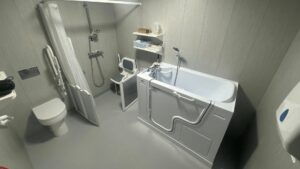
If you find that deep, consistent heat is the only thing that soothes your joint pain, a walk-in bath is often the superior choice. Being immersed in warm water (hydrotherapy) helps to decrease inflammation and improve circulation. However, the design must be right. We recommend baths with low-entry doors, like The Louisiana, to eliminate the need to step over a high bathtub rim, which can be dangerous when balance is an issue.
To enhance the experience further, consider “invisible” additions like heated backrests or internal air-spa systems that gently massage the joints without the need for manual movement. All of our walk-in baths come with the potential of adding these features.
How a Walk-in Shower Can Help with Arthritis
For those prioritising ease of access or the use of a wheelchair, a walk-in shower or wet room is the go-to option. By removing a shower tray entirely, a seamless floor is created, and by doing so, it eliminates trip hazards. To further enhance the arthritis friendly design of walk-in shower or wet room bathrooms, we look at further details to reduce physical discomfort:
- Low-maintenance wall panels: Instead of tiles, we use large-format, high-quality wall panels. These give a sleek, contemporary look; more importantly, they are grout-free. This removes the need for painful scrubbing, with the only cleaning needed being a simple wipe-down.
- Fold-down seating: Even if you prefer to stand in the shower, having a discreet, wall-mounted seat allows you to rest your hips and knees while washing, reducing the risk of fatigue-related falls.
- Smart thermostatic controls: We often integrate digital showers that can be turned on via a remote. This allows the water to reach the perfect temperature before you even enter the cubicle, preventing any kind of cold shock.
The Toilet Area: A Key Consideration for an Arthritis-Friendly Bathroom
The toilet is often the most difficult area of the bathroom for those with arthritis due to the sit-to-stand motion, which places significant pressure on the knees and lower back.
A well-designed accessible bathroom solves this through elevation. By installing a comfort height toilet, the distance needed to lower is reduced, making the transition much smoother. To maintain a modern look, our team can utilise wall-hung toilets that can be set to tailored heights for specific customer requirements.
Another thing to think about is the toilet area, and making it more accessible for those with arthritis is around personal hygiene. Limited movement in the hands can make using toilet tissue painful, so it is worth considering integrated bidet toilets that provide a hands-free solution. This is a prime example of “invisible accessibility”, a high-tech feature that looks like a luxury addition but provides essential support for independence and dignity.
Other Essential Adaptations for Arthritis Friendly Bathrooms
While structural changes like walk-in baths are important, further adaptations often dictate how comfortable the bathroom will be for those with arthritis. Traditional fixtures usually require a pincer grip or twisting motions, and it is key to move away from this.
For a full run-through of the changes we fit most often, see our guide to bathroom adaptations for older adults.
Leverage and Accessibility
The most effective change you can make is swapping standard twist-knob taps for lever-operated mixers. These can be operated with the flick of a wrist or even the side of the hand, requiring zero grip strength. We often suggest adding wall-mounted pump dispensers for soap and shampoo, as you may find in hotels. This removes the struggle of unscrewing slippery bottle caps during bathing.
Storage Within Reach
Stretching to high cabinets or bending to floor-level cupboards can cause unnecessary flare-ups. In an arthritis-friendly design, prioritise “mid-zone” storage. This includes recessed shelving in the shower and pull-out vanity drawers that bring essentials to you, rather than you reaching for them.
A Checklist of Arthritis Aids
These bathroom adaptive equipment items are also worth considering to create a truly safer and more accessible environment:
- Slip-resistant solutions: While we install non-slip flooring for all of our mobility bathroom renovations, another addition is high-quality bath mats with strong suction grips that are a vital temporary measure if you currently have a standard bathtub.
- Support everywhere: Modern grab rails and bars should be placed not just in the shower, but also near vanity areas and the toilet. They provide a helping hand during transitions.
- Hair washing aids: For those who find it difficult to lift their arms for long periods, hair washing aids like long-handled sponges and contoured brushes can reduce joint strain.
- Shower flexibility: Add an adjustable/moveable shower head, allowing those with arthritis to sit comfortably while washing and removing the need to awkwardly position under a fixed stream of water.

Our Top 3 Tips for an Arthritis Friendly Bathroom
Designing a bathroom for arthritis is about planning for your “worst day” so that every other day becomes easier. Based on over 30+ years of experience in the industry and specialist installations, we recommend focusing on these five tips:
1) Prioritise Lighting and Visual Contrast
Good visibility is your first line of defence against trips. We recommend dimmable, anti-glare LED lighting to ensure the room is always well-lit without creating harsh reflections. If you experience light sensitivity, then layered lighting allows you to keep the room bright enough for safety while remaining gentle on the eyes.
2) Establish a Two-Point Grip
Stability is vital when moving into a specific area of the bathroom or away from it, such as stepping into the shower or rising from the toilet. It is important to make sure that there is a stable, weight-bearing surface within reach. This doesn’t have to mean you install grab rails everywhere; for example, a sturdy vanity unit or a reinforced glass shower screen can also provide that second point of contact more discreetly.
3) Invest in Future-Proofing
Even if you don’t require a fold-down seat or extra grab rails today, we recommend reinforcing your walls during the initial installation. This “invisible” preparation means that if your mobility needs change in five years, the necessary support can be added in minutes without the need for a full renovation.
Navigating Financial Support: VAT and Grants
A specialist bathroom renovation is an investment in your long-term health. Fortunately, there is financial support available to help manage the costs.
If you have a long-term condition like arthritis, you may be eligible for VAT exemption on the cost of mobility adaptations for your home. This can represent a saving of 20% on the total cost. Also, many of our customers have applied for a Disabled Facilities Grant (DFG) through their local council. This grant is designed specifically to help fund home improvements that allow people with disabilities or chronic conditions to live safely and independently in the home they love.
For a further comprehensive comparison, our guide on how to fund a mobility bathroom will provide more information for you!

Common Questions, Answered Clearly!
As mobility bathroom specialists, we often hear specific concerns from those living with Rheumatoid Arthritis (RA) and osteoarthritis. Below, we have summarised our advice on two common questions we hear or customers face in the bathroom.
How to get in and out of a bathtub with Rheumatoid Arthritis?
When RA affects the hips, knees, or ankles, the high edge of a standard bath becomes a big barrier. To enter safely, the goal is to remove this “climb”. A walk-in bath with a low-threshold door is the most effective solution, as it allows you to enter and then sit comfortably on a raised seat. However, if you prefer your existing bath, consider a motorised life seat which handles the entire weight of the transition and gently lowers you into the water.
What elements in a bathroom assist someone with arthritis?
An arthritis-friendly bathroom focuses on removing the need for fine motor skills and heavy physical activity. The most impactful elements include lever-operated taps, thermostatic mixing valves, and level access bathing solutions that remove trip hazards. Also, consider using “smart” features like digital showers or sensor-activated lighting.
Start Your Accessible Bathroom Transformation
At Age Care Bathrooms, we believe that accessibility and luxury should go hand-in-hand. We don’t just provide equipment; we provide the expertise to ensure your bathroom remains a place you can relax in, regardless of the challenges arthritis may bring.
With over 30 years of experience, our team is here to guide you through every step, from initial design to final installation. They make sure your bathroom is perfectly tailored to your needs.
If you’re ready to reclaim your independence, contact our specialist team today for a free, no-obligation consultation!