 Skip to content

For many of our customers at Age Care Bathrooms, the daily routine of bathing can slowly transition from relaxation into a source of anxiety. We often speak to homeowners who have started to fear the high step over a traditional bathtub or the tripping hazards of old-fashioned shower enclosures.
If you find that your current bathroom doesn’t meet your physical needs, you have probably come across walk-in showers as a potential solution. But what is a walk-in shower, and how does it actually differ from the normal setups you see across the UK?
In this guide, I’m going to break down everything you need to know about modern walk-in shower accessibility solutions. We’ll look at how they work, why they can make a big difference for people with mobility challenges, and how they can help future-proof your home without sacrificing your bathroom’s style.
What Exactly is a Walk-in Shower?
At its most basic level, a walk-in shower is a shower design that gets rid of the need for a high threshold, a heavy door, or a complicated step-in process. Unlike a traditional shower enclosure that sits inside a deep tray, with a sliding door, or one that pivots, a walk-in shower is defined by its open, minimalist design.
Usually, a walk-in shower, like those that we install for our customers consist of two main components:
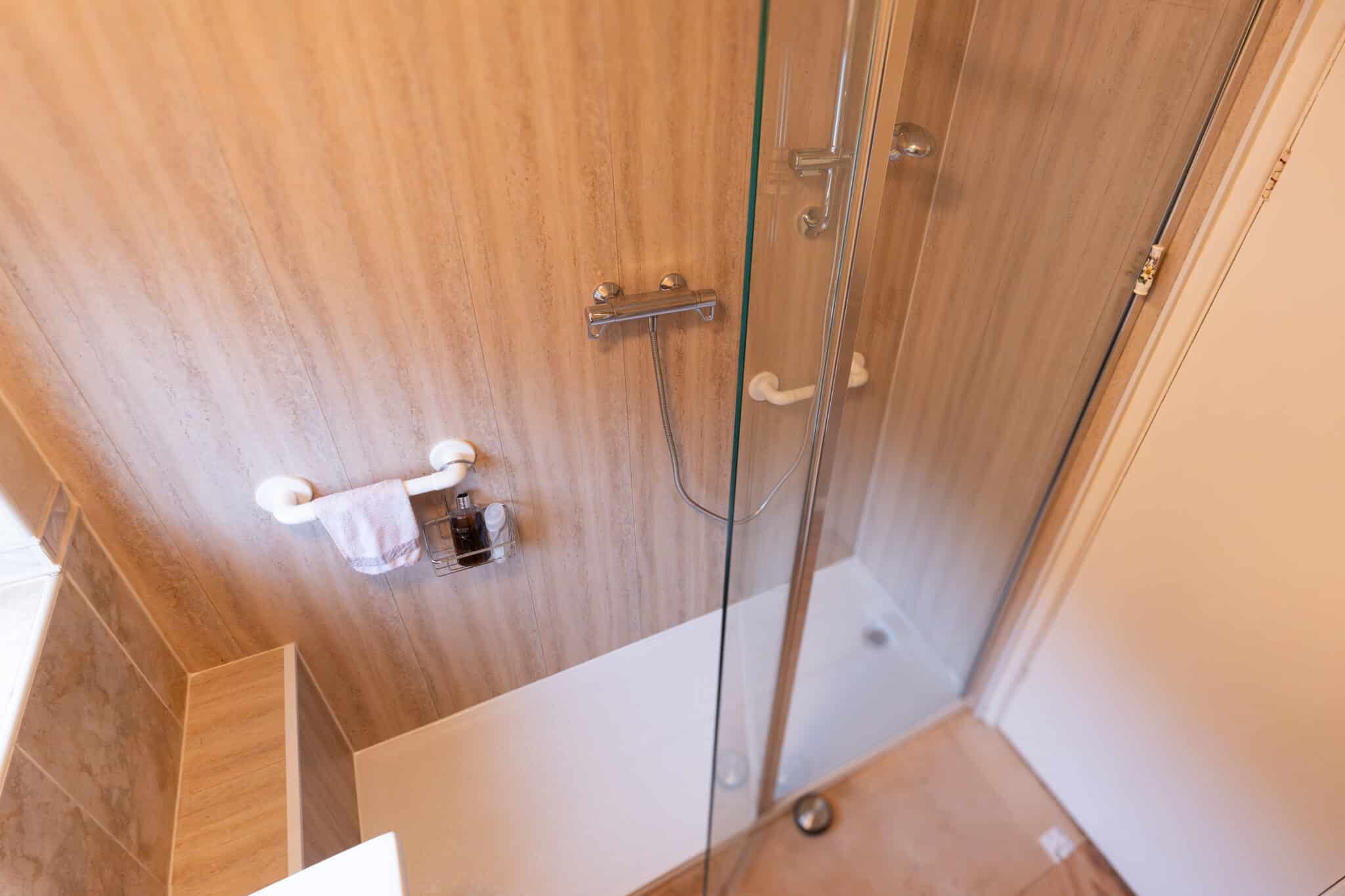
- A Low-Profile Tray: A really slim shower base (can be as low as 25mm to 30mm) that sits nearly flush with the bathroom floor.
- Fixed Glass Screens: Instead of a door that you have to pull or slide, a walk-in shower uses one or two fixed glass panels to deflect water, leaving a wide, permanent opening for you to simply walk in.
As there are no doors to navigate and no high trays to trip over, these showers provide a seamless transition from the bathroom floor into the drying area. For anyone managing a long-term mobility condition or simply looking to make their home safer as they age, a walk-in shower design removes the usual barrier of entry that makes traditional bathrooms so difficult to use for many of our customers.
Walk-In Shower vs Wet Room vs Traditional Enclosure
We find that there is often a lot of confusion between these three options. While they may look similar in a brochure, they function very differently in a real-world home environment, especially when accessibility is a priority.
The Traditional Enclosure
This is what most people are trying to replace. It usually features a high-sided tray (around 100mm or more) and a door on a track.
The biggest struggle with a traditional enclosure is that the high step-in is a major trip hazard, and the door tracks are notorious for collecting grime and eventually becoming stiff, making them difficult for those with limited grip strength to operate the door.
The Full Wet Room
A wet room is a completely waterproof room where the floor is sloped towards a drain. There is no “tray” at all.
- The Benefit: a wet room offers total level-access, which is perfect for wheelchair users.
- The Consideration: Wet rooms require significant structural work, if required, which can make them more expensive and time-consuming to install vs a walk-in shower.
The Walk-In Shower (Middle Ground)
A walk-in shower is often seen as a sweet spot for many of our customers. It offers the sleek, open feel of a wet room but utilises a dedicated low-profile tray.
Due to the nearly level access, it allows people to not need the extensive and sometimes expensive floor-tanking requirement that comes with wet room installations. A walk-in shower can be seen as a faster, more cost-effective way to achieve a better level of accessibility, while also keeping the rest of your bathroom dry.
By choosing a walk-in design for your new mobility bathroom, you get the safety of open-access combined with the reliability of traditional drainage.
Who is a Walk-In Shower Best For?
While anyone can enjoy the sleek, modern look of a walk-in shower, they are specifically engineered to solve the daily struggle for individuals with specific physical requirements. In our experience, four key groups benefit the most from a walk-in shower installation.
1) Those with Limited Mobility or Balance Issues
If you find yourself holding onto a towel rail or the side of the sink to steady yourself, a walk-in shower provides a much safer environment. The lack of a high step-in means you aren’t balancing on one leg to get into the shower, a moment where many bathroom falls can happen.
2) Wheelchair and Walker Users
For those who use mobility aids, a traditional enclosure is often a complete no-go. A walk-in shower with a low-threshold tray or a level-access entry provides the wide clearance needed to move in and out safely.
3) Individuals Requiring Caregiver Assistance
Standard showers are notoriously tight. A walk-in design offers the footprint needed for a carer to assist comfortably, without both people feeling restricted or trapped behind a sliding door.
4) The Future Proofers
Many of our customers are fully mobile now but want to ensure that their home remains functional for the next 20 years. Installing a walk-in shower is a smart investment that prevents the need for any disruptive emergency renovation later down the line.
The Core Benefits of a Walk-In Shower (And Honest Disadvantages)
At Age Care Bathrooms, we truly believe in transparency with our customers. While walk-in showers are a common choice and standard for accessibility, there are a few considerations you should keep in mind to ensure you get the right setup for your home.
The Benefits of Walk-in Showers
Let’s first take a look at the key benefits:
- Unmatched Safety: As we’ve already mentioned, removing the trip hazard of a high step immediately reduces the risk of injury. Not only that, if you combine a walk-in shower with non-slip flooring and thermostatic valves, which we use for our installations every time, it helps to create a stress-free environment.
- Effortless Maintenance: Without door tracks to collect soap scum or heavy curtains to wash, walk-in showers are much easier to clean. Our team also recommend to customers the use of seamless acrylic wall panels instead of tiles for their bathroom renovation, as they also eliminate grout lines that can collect mould.
- A Bigger Feeling Bathroom: Because the glass is transparent and the floor is continuous, walk-in showers make even small UK bathrooms feel much bigger and airier.
The Disadvantages of Walk-In Showers (and Our Solutions!)
Now let’s look at some of the cons of walk-in showers, but how you can combat them…
- Potential for Splashing: As one side is open, water can sometimes escape. The solution here is that when we install walk-in showers for customers, we use expertly angled floors and high-flow drainage to ensure water is pulled towards the waste straight away. We can also apply small return panels to the glass so that stray droplets are caught.
- Temperature & Drafts: An open shower doesn’t trap steam as effectively as a closed box. We often recommend installing a powerful overhead rain shower to keep your body fully covered in warm water, or positioning the shower area away from windows and doors to minimise drafts.
Choosing the Right Walk-In Shower Design for Your Space
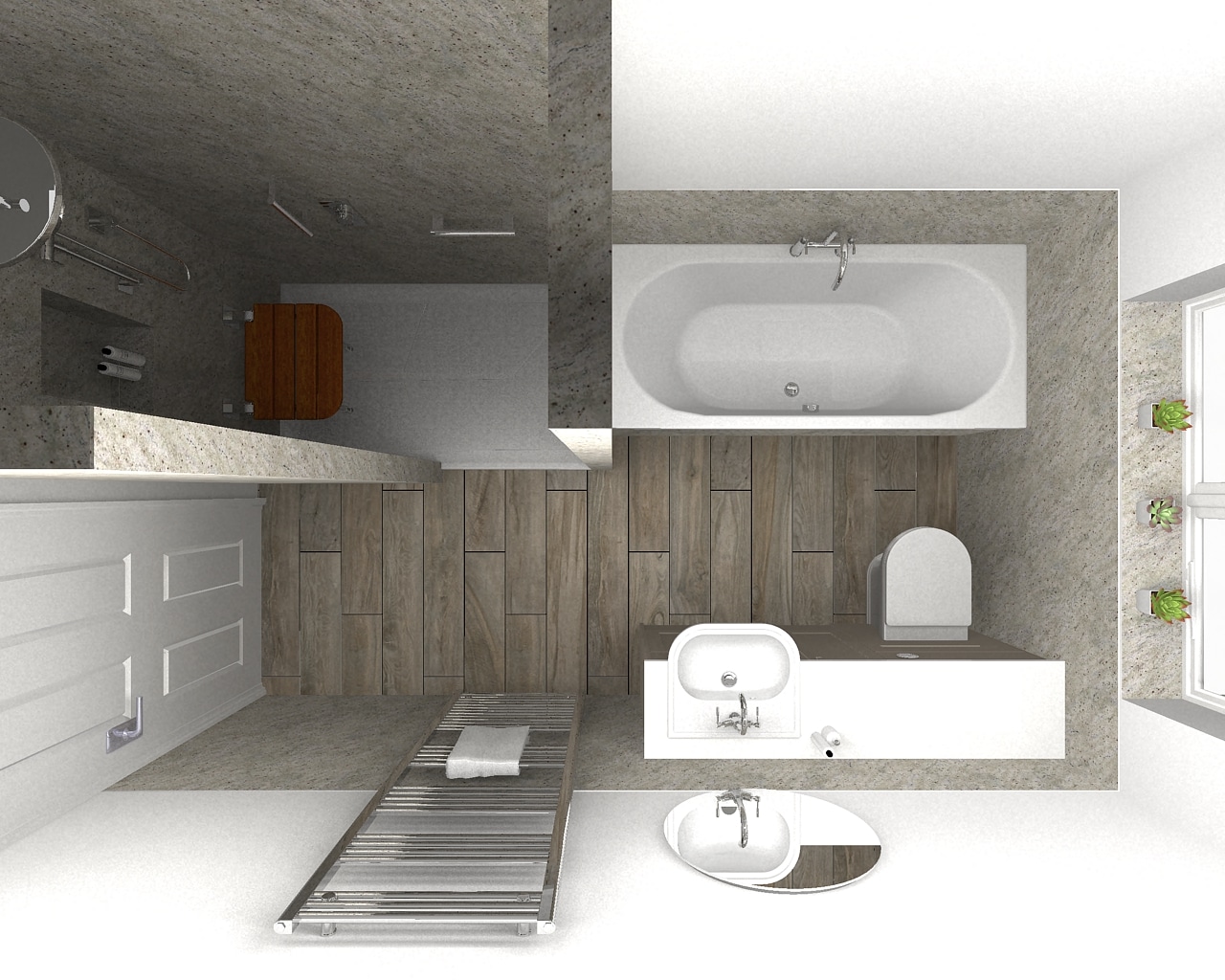
Choosing a shower isn’t just about picking a low-level tray; it is also about mapping out how you move around your bathroom. When our team sit down with a potential customer for a free 3D design consultation, we look at three main areas:
- The Entry Point: Depending on your mobility, you might choose a front-entry or a side-entry layout. If you use a walking frame, a front-entry usually offers the straightest, easiest path into the water, as an example.
- Glass and Screens: For accessibility, we always recommend toughened safety glass. You can choose between clear glass for a spacious look or frosted glass if you’re looking for more privacy, which can be important in households where caregivers may be around.
- Finding the Right Size: One of the most common questions our team get from customers is whether or not a walk-in shower will fit in their current bathroom layout. Most of the time, our walk-in shower installations are designed to fit exactly where the previous traditional bathtub would be (around 1700mm in length). However, it is worth noting that the ideal size may depend on whether you also need space for a shower seat or carer.
For a deeper dive into specific dimensions needed for a walk-in shower, take a look at our guide on what is a good size for a walk-in shower.
What Accessible Features Can Be Added to a Walk-in Shower?
For many, a walk-in shower is only as accessible as the features that are added to it. When we design a mobility bathroom for a customer with specific physical needs, we look beyond just the walk-in shower and focus on details that provide true independence.
Some of these features include:
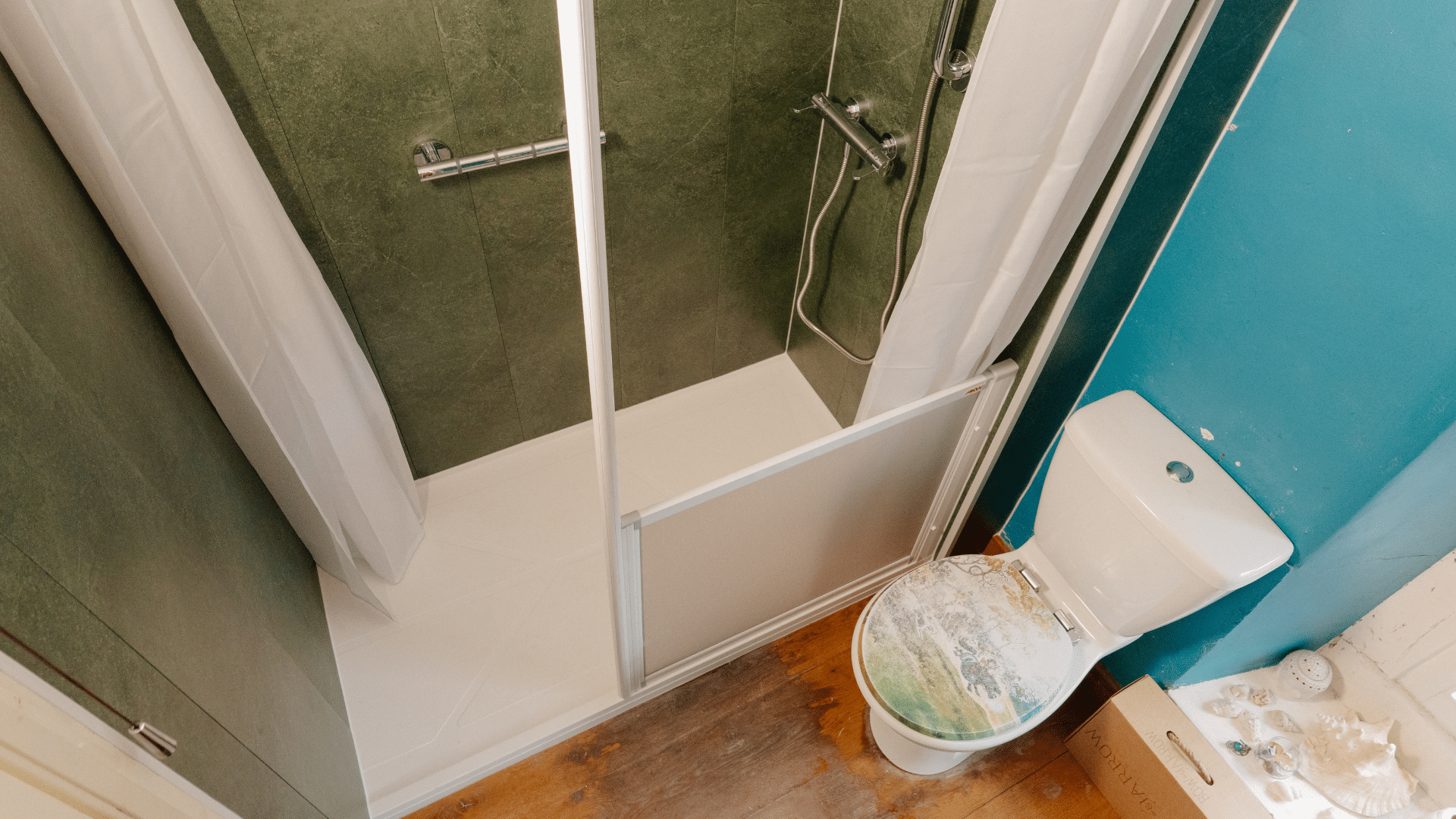
- Weighted Grab Rails: We don’t just install grab rails to the wall; we make sure that they are positioned at the exact height and angle you need to go from standing to sitting.
- Fold-Down Padded Seats: If standing for 10 minutes or more is a struggle, a wall-mounted seat allows you to enjoy the water in total comfort. When not in use, these seats will fold flat against the wall so the shower still remains spacious for others to use it.
- Easy-Grip Level Controls: For people with arthritis or limited hand movement, traditional dials can be painful. Large lever handles allow you to control the flow and temperature with a simple nudge.
How Much Does a Walk-In Shower Cost to Install?
This is the question that every homeowner wants an honest answer to. As a walk-in shower involves more than just swapping out the old bath, the cost will reflect the structural and plumbing work to make sure the space is completely safe and professional.
Typically, a fully managed installation for an accessible walk-in shower starts from around £8,500. While you may come across “DIY” kits for less, that price rarely includes essential factors, such as:
- Plumbing Reconfiguration: Often, when our team of Age Care installers remove an old bath, we have to move the waste pipes to ensure the new low-profile tray drains correctly.
- Structural Flooring Work: In some cases, not all, to achieve that near-level access, our team will need to reinforce or adjust floor joists.
- Safety Features: High-end thermostatic valves, grab rails, and non-slip flooring are specialised items that carry a higher cost than standard DIY shop fixtures that anyone can add.
- The Age Care Guarantee: When you have a walk-in shower installed by us, you aren’t paying for someone to just do the installation; you are paying for a start-to-finish service from a professional 3D design to our team of fitters who specialise in mobility bathrooms. We do not use subcontractors, which means we can guarantee the quality of every seal and joint.
Why a Walk-In Shower is a Smart Investment
We often discuss with clients that a walk-in shower isn’t just a bathroom update; it’s an insurance policy for your independence.
By removing barriers today, you are making sure that you can stay in the home you love for longer. Not only that, but a walk-in shower can add value to your property as accessible living is becoming a big priority for buyers in the UK.
Whether you are 55 and planning or are older and need a solution now, a walk-in shower is practical, stylish, and life-changing.
What is a Walk-In Shower: A Summary
Switching to a walk-in shower is one of the most effective ways to reclaim your confidence in the bathroom. We’ve covered a lot in this guide, from technical differences between types of showers to specific features that can enhance a walk-in shower further when it comes to mobility.
To recap the most important parts:
- Safety First: Removing the high step of a bathtub is the single best way to prevent bathroom falls.
- Custom Design: Every walk-in shower should be built around your specific needs, including seat height, rail placement, and entry points.
- Ease of Use: From lever taps to grout-free wall panels, the best accessible bathrooms are those that are effortless to use and maintain.
- Professional Fitting: Never cut corners on walk-in shower installations. Using a dedicated team of experts ensures your bathroom is structurally sound and 100% watertight.
We’re Here to Discuss Your Bathroom Requirements
At Age Care Bathrooms, we take the stress out of the entire process of getting a new walk-in shower for your home.
We handle every detail from the initial home assessment, 3D design, and final details of the installation.
If your current bathroom is becoming a struggle, our team of experts are here to help you create a space that provides you with total peace of mind.
Call us today on 0800 999 8994 or book in for a home assessment using our form below. We look forward to hearing from you!