 Skip to content

For many of us, there is nothing quite like sinking into a warm bath at the end of a long day. It is a place to relax, to soothe aching joints, and enjoy a bit of quiet “me time”. However, we also know that for many of our customers at Age Care Bathrooms, that simple pleasure can start to feel a little out of reach.
When the side of the bath starts to feel like a mountain to climb, the bathroom can transform from a sanctuary into a place of stress.
If you’ve noticed that getting in and out of your current bath is becoming a bit of a struggle, you certainly aren’t alone. It is one of the most common things we hear from the families and people we work with. This is wheres low level baths can make a world of difference. A clever, simple solution designed to take the “climb” out of bath time, helping you keep your independence without having to give up the soak you love.
In this guide, we’re going to take a proper look at what low-level baths are, how they differ from what you may be used to, and whether they are the right choice for your home or loved one.
Let’s begin by exploring low level baths a bit more…

What is a Low Level Bath?
If you were to look at a low level bath (sometimes called a low-sided bath or shallow bath) alongside a standard tub, you might not notice a massive difference at first glance. They are designed to look just like a traditional, stylish tub. The magic, however, is in the measurements of a low-level bath.
A standard bath in the UK typically has a height of around 55cm from the floor to the rim. While that sounds fine on paper, it requires a significant “step-over” motion that can be tricky. A low-level access bath, by comparison, usually sits much lower, often between 40cm and 43cm.
Essentially, these baths are designed with a much lower profile. They are shallower than a standard bath, which allows the sides of the tub to be lower, reducing the height that you need to lift your leg, making the process of getting into the water feel much more comfortable and safe. Although a subtle change, it really makes a huge impact on how easy it is to use your bathroom independently.
Now, let’s take a look at the benefits low-level baths can provide!
The Benefits of Low Level Baths
When we talk to people about low level baths for the elderly or those with mobility issues, the conversation usually moves quickly past the specifications and onto the benefits.
The biggest one, by far, is independence. There is a certain dignity in being able to manage your own personal care without needing to call for help, and a lower tub is often the key to making this happen.
Safety is another major factor. Most falls in the bathroom happen when someone is moving or stepping over a high ledge while balancing on one leg. By lowering that ledge, you significantly reduce the risk of a slip or trip. It gives you and your family that extra bit of peace of mind.
We also find that our customers love the aesthetic of a low-level tub. This is because they don’t look like “medical” equipment; they can fit well into a modern, stylish bathroom. It can improve accessibility without compromising the look of your home.
Finally, because low-level baths are shallower, they actually use less water. This makes them more eco-friendly and cost-effective.
Who Benefits the Most from Low Level Baths?
While anyone can enjoy a lower-profile bath, we find that they are particularly well-suited to a few specific groups of people.
The Elderly
If you are starting to find that your joints are a bit stiffer in the morning or your balance feels a little less “sure” than it used to, a low-level bath is a brilliant way to future-proof your home. It’s about making a change before a struggle becomes a safety risk.
Individuals with Limited Mobility
For those living with conditions like mild arthritis or hip and knee issues, the reduced step-over height can be the difference between a painful experience and a relaxing one. Low level baths can make it much more manageable for daily use.
Carers and Family Members
If you are someone who helps a loved one bathe, a lower side makes your job much easier and safer. You don’t have to provide as much physical support during that tricky step-over move, which also protects your own back and posture.
Key Features of Low Level Baths
Now, these baths aren’t just “lowered” versions of standard tubs; they are thoughtfully created with safety in mind.
When you are considering different models, there are a few features that we always recommend that our clients consider to ensure they are getting the best possible experience.
Let’s explore these features further:
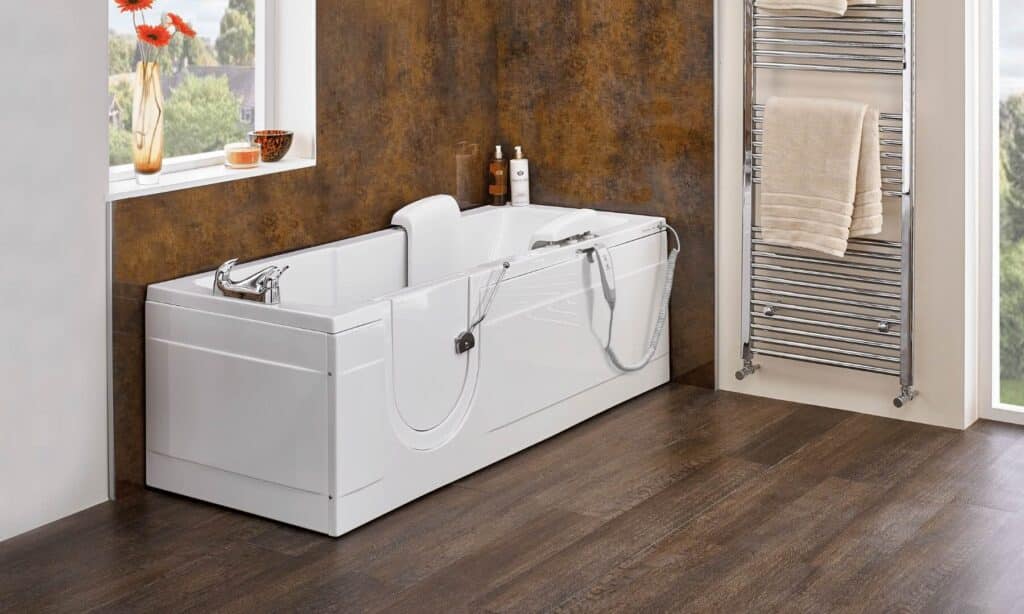
- Twin Grips: Most quality low-level baths come with “twin grips”, which are sturdy handles on either side of the tub. These are essential for providing a solid point of contact when moving from standing to sitting. Twin Grips gives you something firm to hold onto.
- Anti-Slip Bases: The floor of a low level access bath is usually textured. This anti-slip surface provides extra traction for your feet, which is vital when the surface is soapy and wet. It’s a simple feature that goes a very long way in preventing those heart-in-mouth moments.
- Reinforced Acrylic or Steel: To ensure the bath lasts a lifetime, they are often made from reinforced materials. This means the bath doesn’t “flex” or creak when you step into it, providing a much more stable feeling underfoot.
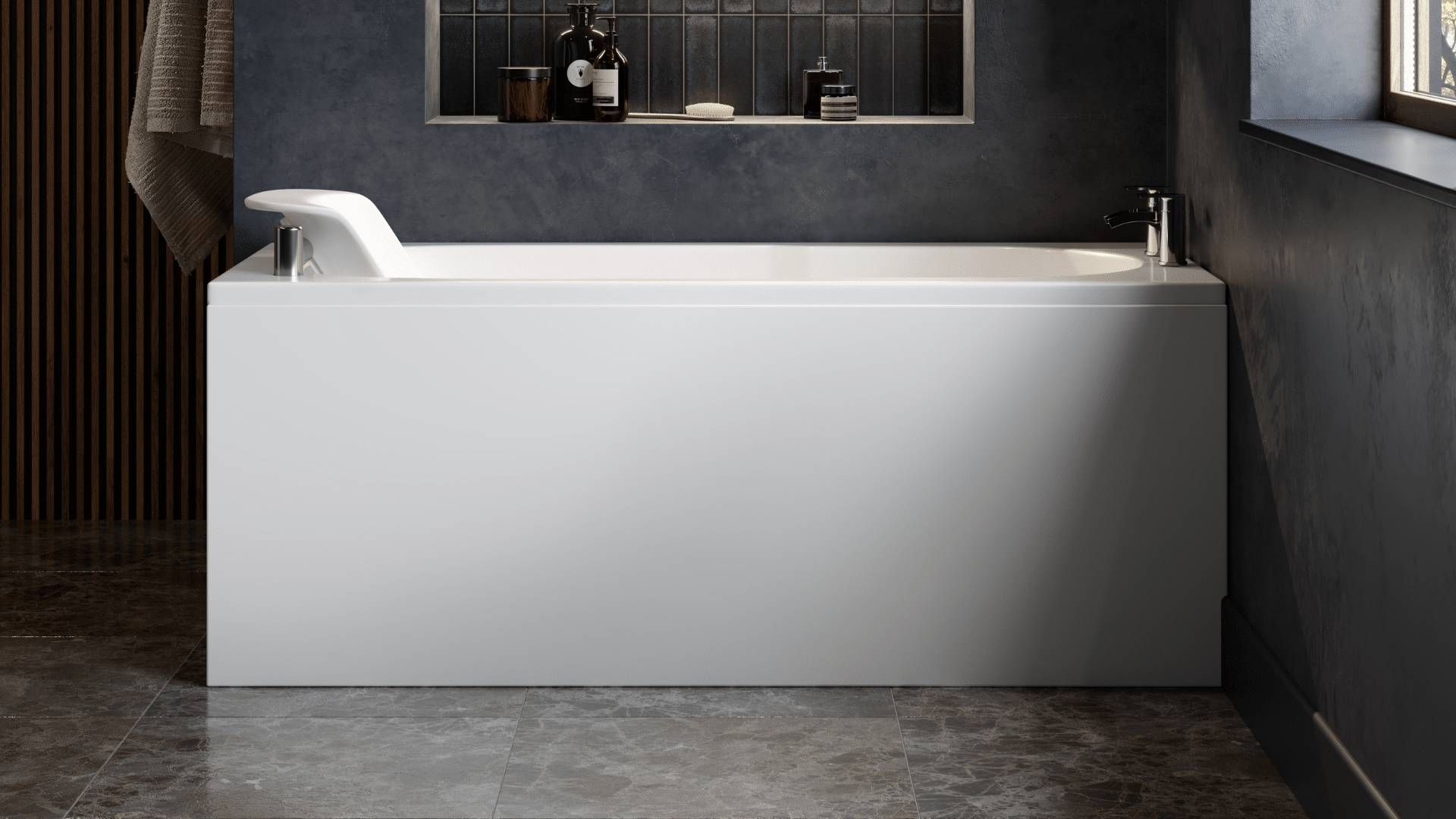
- Low Profile Bath Panels: To match the lower height, these baths come with specific skirting panels that sit flush to the floor of the bathroom. This helps to give a finished look and doesn’t leave any awkward spots that can be hard to clean.
Let’s now look at the different types of low-level baths to help you understand your options further!
What Types of Low-Level Baths are Available?
There are many styles to suit different bathroom layouts, as we know, no bathroom is the same! Depending on your space and how you like to use your bathroom, you could consider the following low-sided tubs…
Standard Rectangular
These look like your current bath, and are usually around 170cm in length. They are created to be a straight swap for your traditional bath, which can make the installation process simpler, as plumbing is already sorted.
Twin Grip Models
As mentioned above, these low-level baths feature integrated handles. Some can have one handle on each side, others may have two on each side. This helps provide support at various stages of you getting in and out of the bath. These models are a popular choice for mobility-focused bathrooms.
Shower Baths
If you still enjoy a quick shower in the morning but want the option of a longer soak in the evening, an L-shaped or P-shaped low-level bath might be the best option. These have a wider section at one end for showering, but still maintain that lower step-in height for better accessibility.
Is a Low Level Bath the Best Option?
The question we hear the most often is “Which is the best option for me?” and the honest answer is that it depends entirely on personal requirements and needs.
For many of our customers, a low-level bath can be a perfect middle ground, for example, if you still have a good amount of strength in your body but find that a standard 55cm bath side is too much of a hurdle, then a slight drop that a low-sided bath offers may be all you need to gain back that confidence.
However, we do encourage thinking about the long-term. With a low-level access bath, you will still need to lower yourself down to the floor of the tub, and more importantly, push yourself back up again once you have finished your bath. If you feel that this is quite a struggle, a low-level bath won’t solve that problem.
In those cases, a walk-in bath might actually be the easiest and safest option. Some do categorise these types of bath as low-level tubs. Ultimately, walk in baths allow you to walk in through a door situated at the side of the bath at floor level, and users can sit on a raised, chair-height seat with certain models, like The Montana or The Tennessee. With these solutions, you never have to worry about getting back up from the floor.
It is all about being honest about how your mobility is today and how it might be in a few years.
Things to Consider Before You Purchase
Before committing to a new low-level bath, there are a few things to consider, and we recommend checking.
At Age Care Bathrooms, we will handle these technical parts for you, but it is always good to have them in mind:
- Your Own Height and Reach: While a shallower bath is easier to get into, it does mean that the water level will also be lower. If you are quite tall, you might find that you are no longer as submerged as you like.
- Floor Strength: Most low-sided baths are made from reinforced materials to ensure they are stable. When you add the weight of a full bath and a person, it can get quite heavy. Most homes in the UK are fine, but in older properties with timber floors, it is important to check that the joists are suitable.
- Plumbing Alignment: Swapping a standard bath for a low-level one, the plumbing is normally already correct and in place. However, as the bath is lower, the waste pipe needs to be correctly positioned to ensure water flows away as it should.
- Wall Tiling: If your current batch is at a standard height, you may find that a gap in the tiling appears. We often suggest a “refresh” of the surrounding tiles or wall panels at the same time as your new low-level bath installation to get that perfect finish.
How Much Do Low Level Baths Cost?
One of the many frustrations for people looking for a low-level bath is that many websites only show the price for the “tub” itself. It can be very common to see a bath advertised online for a few hundred pounds, but it is really important to remember that the bath is only one piece of the puzzle.
At Age Care Bathrooms, we believe in being transparent about what goes into a professional installation, as the “cheapest” option on paper often ends up being the most expensive if it isn’t fitted correctly for your specific needs.
The total investment for a new bath, whether that be a low-level model or a walk-in bath, is influenced by several factors beyond the product.
We always recommend getting a full “all-in” quote that covers everything from the initial 3D design to the final tidy-up once installation is complete. No hidden surprises, and you can be certain that your new low-level bath and bathroom is safe for years to come.
Low Level Baths: A Summary
Choosing the right bath with accessibility in mind is about finding that sweet spot between safety, comfort, and your budget.
Here is a quick recap of our guide to low-level baths:
- Ease of access: A low-level bath drops the “step-over” height, making it much safer and more manageable for daily use.
- Simple Transition: It is a brilliant way to future-proof your home before a struggle becomes a legitimate safety risk, while maintaining a modern bathroom look.
- Always Consider the Long-Term: If you find it very difficult to stand up from a low position, it will be worth considering if a walk-in bath is a better investment for your independence.
- Professional Fitting is a Must: The success of a low-level bath depends on a professional installation that considers your plumbing, flooring, and specific mobility needs. All of which can be provided by our team.
Create Your Perfect Accessible Bathroom
At Age Care Bathrooms, we don’t believe in one-size-fits-all solutions. Whether a low-level bath or a walk-in tub, our team is here to help you make the right choice for you.
We handle every step of the process, from initial design to the full installation. If you’re unsure how a new bath would look in your space, we can provide a 3D rendering, completely free, so you can see exactly how your new bath will look.
If you’re ready to make bathtime enjoyable again, get in touch with us today on 0800 999 8994 or book a free home design for a free no-obligation quote and consultation.