 Skip to content

There is a reason why humans have been drawn to hot springs and thermal waters for thousands of years. An immediate sense of relief washes over you the moment you sink into warm water, and it is an experience that signals to your brain and body that you can let go of the day’s and or life’s stresses.
At Age Care Bathrooms, we talk to many customers who have begun to view their bathroom with fear rather than relaxation. Standard bathtubs become a struggle to get in and out of, and this leads people to no longer have baths altogether, instead opting for a quick, functional shower.
However, by losing the ability to soak, people aren’t losing a cleaning routine; they’re losing access to a great tool of physical and mental well-being. In this guide, we’ll explore the top benefits of a hot bath, especially for those managing mobility challenges, and explain why a safe, accessible bathroom is the key to unlocking these health benefits.
Let’s get started!
Are Hot Baths Actually Good for You?
To keep it short and sweet, the answer is yes. Although showers are great for quick hygiene, the act of being submerged in warm water does trigger physiological changes that a shower simply cannot replicate.
When you soak in a hot bath, your internal body temperature rises, and this causes your blood vessels to dilate. By doing so, circulation improves, and blood pressure lowers. Scientific research has even suggested that the “passive heating” provided by a hot bath can have similar benefits to low-intensity exercise.
For those with limited movement or chronic pain, a hot bath can act as a gentle form of therapy. It supports the weight of the body, takes pressure away from tired limbs, and allows the heat to penetrate deep into the muscles and joints. As long as you are mindful of safe bath temperatures, a regular hot soak is one of the most effective things you can do for long-term health.
Now to dive into the top benefits that a hot bath can provide to anyone!
These are the Top 8 Benefits of a Hot Bath
To help you understand why we are so passionate about helping our customers regain their bathing independence, let’s look at the various hot bath benefits you can enjoy when your bathroom is designed to support your needs.
1) Significant Relief for Aching Joints and Muscles
One of the most immediate benefits of hot bathing is the reduction of physical pain. For those living with arthritis or general mobility issues, the buoyancy of the water is a real game-changer. Water reduces your body weight by around 90%, helping to take the load off of knees, hips, and ankles.
When you couple that with the above, with deep heat, muscles will begin to relax. This helps increase blood flow to damaged tissues, helping to flush out toxins and reduce inflammation. If you find that your joints feel stiff or are “locked” in the mornings, a warm soak in an accessible tub can be the perfect way to regain your range of motion for the day.
2) Improved Quality of Sleep
We all know that a warm bath before bed is a classic remedy for insomnia, but there is real science behind it. As our internal clock is governed by temperature, in the evening, we naturally cool down to prepare for sleep.
By taking a hot bath an hour or so before bed, body temperature is raised, and the moment you step out of the bath, your body begins to rapidly cool down. This rapid change in temperature mimics the body’s natural transition into sleep mode, signalling your brain that it’s time to do just that, sleep.
For our customers who struggle with restlessness or pain-related sleep issues, this routine can be the difference between a bad or great night’s sleep.
3) Enhanced Cardiovascular Health
Regularly utilising the benefits of a hot bath can actually give your heart a gentle workout. As we spoke about earlier, heat causes blood vessels to widen, allowing blood to flow more easily through the body.
This process reduces arterial stiffness and helps lower blood pressure. For those who may find traditional exercise difficult due to mobility restrictions, a hot bath provides a safe way to stimulate the heart and improve circulation. It is, however, important to remember that while beneficial, a hot bath should not be a complete replacement for movement, but a support to lead a healthy lifestyle.
4) Respiratory Support and Easier Breathing
A benefit of a hot bath that is sometimes overlooked is the effect of the steam on your respiratory system. When submerged in warm water, the moisture in the air increases, and breathing in this warm, damp air can help loosen mucus in the chest and throat, making it a natural remedy for congestion and coughs.
For people who find that their breathing feels tight or those who struggle with breathing issues, steam from a hot bath can act as a gentle, whole-body inhaler, clearing airways and improving comfort levels, especially during colder months in the UK.
5) Lowering Stress and Cortisol Levels
The mental benefits of hot bathing are also just as significant as physical ones. When you soak in a hot bath, your nervous system shifts from a fight or flight mode into a rest mode.
Studies show that regular warm water bathing can lower cortisol (the stress hormone) levels. For our customers, the bathroom is often the only place in the home where they can truly shut the door and find a moment of peace. By making that space safe with an accessible walk-in bath, we aren’t just installing a fixture; we are protecting that mental sanctuary people love to have.
6) Natural Skin Cleansing and Hydration
While we think of baths as just a way to get clean, a hot bath does more than just wash away the dirt of that day. Hot water opens up the pores, allowing for a deeper cleanse that removes toxins and pollutants from the skin.
However, this is where caution is needed; if the water is too hot, it can strip away natural oils and leave the skin feeling dry or itchy. At the right temperature, a soak will help hydrate the skin’s surface and can improve certain skin conditions.
7) Metabolic Support and Blood Sugar Management
A fascinating benefit that a hot bath can provide is the effect on metabolism. We’ve mentioned “passive heating” before; ultimately, this is when body temperature rises without exercise, and it has been shown to reduce blood sugar levels.
In certain clinical trials, a one-hour hot bath was found to reduce peak blood sugar after eating by around 10% more than exercise did. So, a hot bath can be a supportive way to manage metabolic health, keeping the body’s systems functioning.
8) Cognitive Health and Brain Function
Other studies into thermal therapy have shown that the improved circulation caused by hot bathing doesn’t just affect the body. Increased blood flow also reaches the brain, which can support cognitive function and may even help reduce longer term risk of dementia.
Relaxation provided by the warm water can also help clear mental fog. Many of our customers find that they feel more alert after a morning soak. A hot bath can be a gentle way to wake up the body and prepare the mind for the upcoming day.
Is a Hot or Cold Bath Healthier?
With the recent rise in “cold plunge” and “ice bath” trends, we’re sometimes asked which is better in terms of health.
Ultimately, both have their place but serve different purposes!
- Cold baths are primarily used for acute inflammation and rapid muscle recovery. Cold water will constrict blood vessels and numb the nerves, which is great for a sudden injury, but it can be a big shock to the system. For those with heart conditions or who are sensitive to the cold, this can actually be quite dangerous.
- Hot baths are a much better choice for our customers; they are safer and provide longer-term benefits. Overall, it is a gentler way to manage chronic pain and stiffness, without producing a shock, as a cold bath would.
What is a Safe Temperature, and How Long Should You Have a Hot Bath for?
To truly get the benefits of a hot bath, you have to get the temperature right. If the water is too cool, you won’t trigger circulation benefits. If it’s too hot, you will risk dizziness, skin irritation, or even a dangerous spike in heart rate.
The ideal temperature for a therapeutic bath is between 37°C and 39°C, just above normal body temperature. This provides enough heat to relax muscles without putting strain on the heart. You can read our full breakdown on certain bath temperatures that are important to know.
What is the Recommended Time to Stay in a Hot Bath?
For most people, a hot bath for around 15 to 20 minutes is a common sweet spot. This is long enough for the core temperature of the body to rise and for your muscles to begin the relaxation process, but not too long that a person may become dehydrated or overly fatigued.
Overcome the “Struggle”: Why Accessibility Matters
It’s all well and good listing the benefits of hot bathing, but they are difficult to access if your standard bathtub is impossible to use. For many people with mobility issues, the fear of slipping or getting stuck in a regular tub outweighs the urge to have a bath.
This is where our range of walk-in baths changes everything.
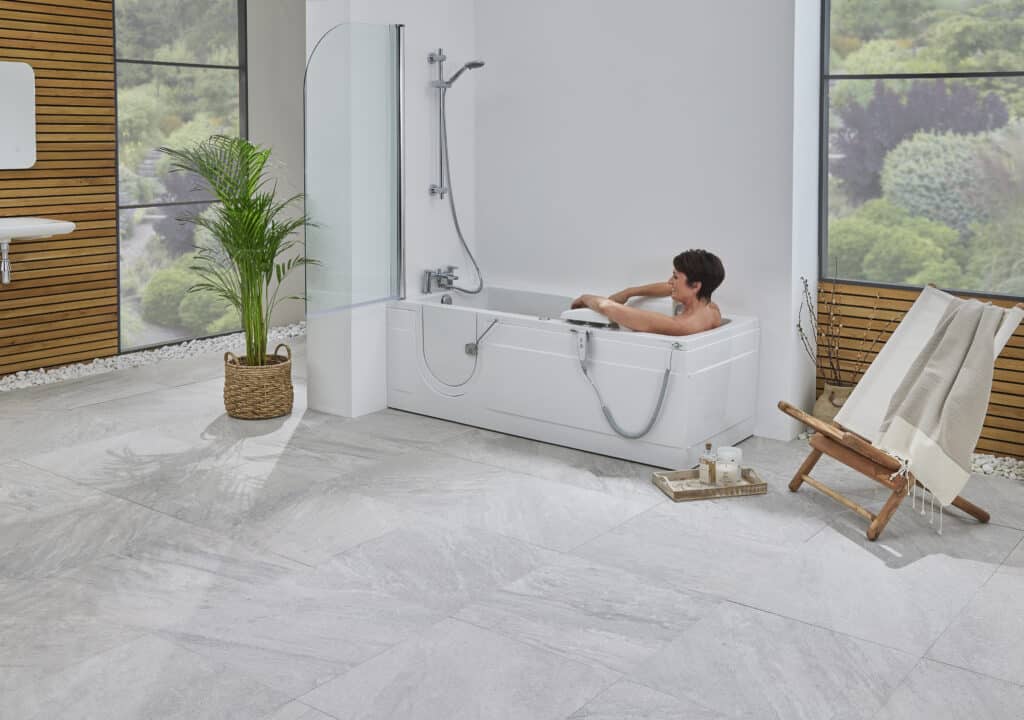
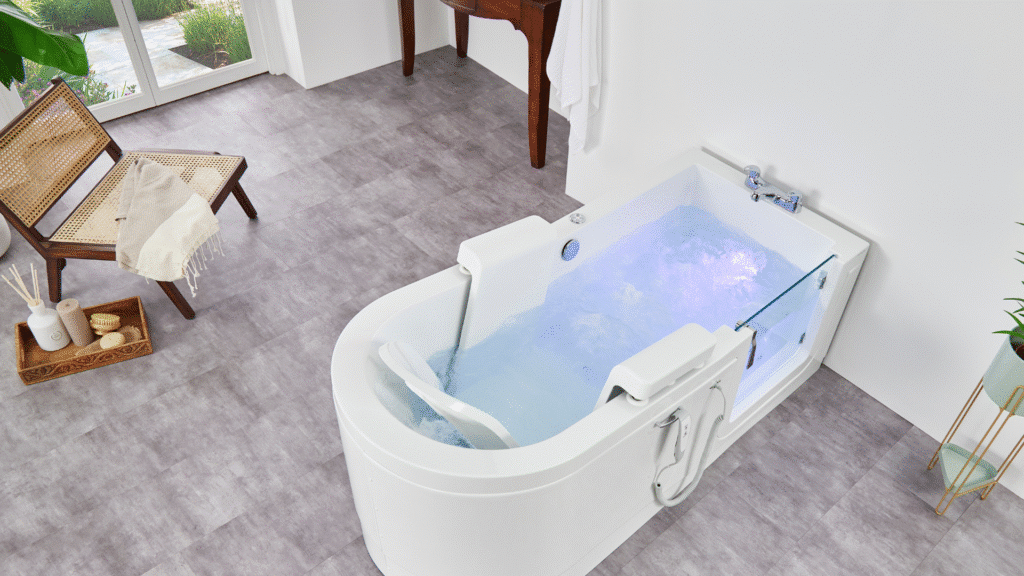
By removing the high sides of a standard bathtub and replacing them with a low-threshold door and ergonomic seat, if required, our bathing solutions remove the fear factor. You can enjoy the heat, buoyancy, and pain relief without having to worry about how you’re getting back out of the bath.
At Age Care Bathrooms, we specialise in providing accessible bathrooms that feature walk-in baths. Our end-to-end service includes:
- A Free 3D Design and Home Consultation: We show you exactly how your new accessible bathroom will look and function.
- Expert Installation: Handled entirely by our own employed team (we never use subcontractors).
- Tailored Features: From powered seats to strategically placed grab rails, we build the bath around your specific mobility needs.
The Benefits of a Hot Bath: A Summary
It is clear that a hot bath is far more than just a hygiene routine; it is a powerful form of therapy that supports your heart, joints, and mental well-being.
To summarise the key takeaways from this guide:
- A hot bath can help take the weight off your joints, while deep heat relaxes muscles and improves circulation.
- Soaking in warm water can shift your nervous system into a rest mode, which lowers cortisol and stress levels.
- To enjoy the benefits of a hot bath without risk, you should aim for a temperature of 37°C to 39°C for around 15 to 20 minutes.
- These health benefits are only available if you feel safe using your bathroom. For those with mobility issues, a standard bath can become difficult, and a walk-in bath can solve these problems.
We’re Here to Help When You’re Ready
At Age Care Bathrooms, we are here to help those who are struggling with their standard bathroom and need to regain independence.
By combining our professional 3D design service with expert installation from our own employed, DBS checked team, we ensure your new accessible bathroom is tailored to your requirements.
Book your free home design consultation today using the form below, or call our team to discuss options further on 0800 999 8994.