 Skip to content
As the years go by, our homes should adapt to our changing physical needs. For many older adults or individuals managing mobility conditions, the traditional bathroom can be a source of anxiety. Using a standard bathtub, it requires a high, single-legged balancing act to get into it, which can lead to a serious slip hazard.
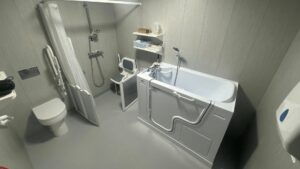
Walk-in baths offer an elegant, structurally safer alternative. By replacing restrictive, high-sided walls with an ultra-low threshold entry door, these specialised baths allow you to walk directly into them and keep a level footing.
If you are considering future-proofing your home or modifying a bathroom for a loved one, you likely want to understand the ins and outs before investing. We’ve put together this comprehensive guidance to explain exactly how walk-in baths work, the mechanical engineering behind their watertight designs, and what to expect from the day-to-day use of one.
Contents
What is a Walk-in Bath?
Before we go into how they work and function, let’s quickly understand what exactly a walk-in bath is and why they can make a difference.
A walk-in bath is a specialised mobility fixture of a bathroom designed to eliminate the physical strain of traditional bathtub bathing. Unlike a standard tub, which forces you to lower you entire body to floor level, and then pull yourself back up, a walk-in bath, depending on the type you choose (more on this down below!), can feature an integrated chair, and most include a leak-proof door. This allows people to enter, bathe, and exit while remaining securely supported at all times.
Surging Popularity of Modern Walk-in Baths
Walk-in baths are no longer viewed as a clinical piece of equipment. According to recent global data by Cognitive Market Research on Walk-in Bath Tubs, the international demand for walk-in baths has experienced a sustained increase over the last few years.
This rising popularity, we feel, has been driven by:
- The desire to age at home: The vast majority of homeowners prefer to remain in their own properties for as long as possible. Investing in a walk-in bath, it preserves independence and reduces reliance on carers.
- Design innovation: Modern manufacturing has blended clinical safety with high-end aesthetic appeal. All of the walk-in baths we have on offer to customers feature sleek finishes, easy-to-use levers, and even luxury spa capabilities.
The “why” behind a walk-in bath is to allow those with mobility issues to regain confidence and to transform bathing from a stressful, high-risk experience back into a relaxing one.
How Does a Walk-in Bath Work? (Easy to Follow, Step-by-Step)
The main difference between a standard bath and a walk-in tub is how they function. Traditionally, you would fill the bath with water and then step inside. With a walk-in bath, you enter the tub while it is dry, seal the door, and fill the water around you.
Below, we’ve put together the process of how a walk-in bath works from start to finish:
Step 1: Entry Through the Low Threshold Door
To start, simply unlatch the integrated side door. Because the door frame cuts directly into the side wall of the bath, the step-over height goes from 400mm to 600mm (standard bath) to a few inches off the floor (walk-in bath). Depending on your specific bathroom layout and physical mobility, the door can open in one of two ways:
- Inward-opening: Swinging into the footwell of the bath. These are the best types for saving space, especially in small bathrooms.
- Outward-opening: Swings into the open room. These provide maximum clearance for individuals who need to transfer from a wheelchair or walking frame to an internal seat in the walk-in bath.
Step 2: Securing the Watertight Seal
Once inside, you can close the door and engage the secure locking mechanism. It is usually a lever or a handle that compresses a specialised, high-grade silicone running along the perimeter of the door frame.
With inward-opening models, the pressure of the water works with this mechanism. As the tub fills, the weight of the water presses the door tighter against the frame, securing the leak-proof seal even further.
Step 3: Filling the Bath Safely
With the door locked, you can then turn on the taps. Walk-in baths use high-performance, thermostatically controlled mixing valves, which are also known as TMVs. These constantly monitor and regulate water temperature at the source, which eliminates the risk of accidental scalding if someone turns on another tap in the home.
Step 4: Bathing Experience
As the water level reaches your chest or waist, you can sit back and relax. Many models come with built-in contoured seating, ensuring that your back is fully supported, and it prevents any slipping down the tub. Walk-in baths are deeper than standard tubs, allowing for your full torso to be submerged. This can offer therapeutic relief to stiff and aching joints and muscles.
Step 5: Rapid Drainage System
When you have finished bathing, you cannot simply open the door; you have to wait for the water to empty. To prevent people from sitting in cooling water, modern walk-in baths, the ones that we can supply, are engineered with quick-drain technology or a dual-plug integration. Through utilising wider internal plumbing tracks, these systems evacuate water significantly faster than a standard home drain.
Step 6: A Confident and Secure Exit
Once the water has completely cleared the internal threshold, the safety latch, or lever, can be used, and the door opened. Well-positioned grab rails are mounted within all walk-in baths, providing sturdy anchor points for hands as you transition from a seated position back to standing. This allows you to walk out of the walk-in bath with total confidence.

The Main Types of Walk-in Bath: Full-Length, Mid-Length, and Compact/Small
Walk-in baths are not a one-size-fits-all solution. Independent mobility challenges are different for everyone, and the standard layout of a bathroom in the UK varies; due to this, walk-in baths can be categorised based on their length dimensions.
Choosing the right one for you is a balance between your physical requirements and the available space in your home. We’ve had a look at the three main types of walk-in bathtubs, their pros, cons, and the specific mobility challenges that they can support best.
Full-Length Walk-in Baths
Full-length models mirror the size of a standard household bath, between 1500mm and 1700mm in length. All feature a low-threshold entry door but allow users to bathe in a more common position and include a more reclined seat inside.
- The pros: Full-length models fit seamlessly into the gap left behind by an old bath without requiring many alterations. Offers a familiar bathing experience and allow taller users to submerge their legs completely.
- The cons: As they hold a larger volume of water, these models can take longer to fill and drain compared to the other two types of walk-in baths. The lower internal seat in some models does require more core and lower-body strength to get in and out.
- Ideal mobility profile for this type: They’re excellent for those in early-to-mid stages of a condition, or people with consistent stiffness in specific areas, mild arthritis, and only minor balancing issues.
Mid-Length Walk-in Baths
Sitting between 1195mm and 1300mm in length, mid-length walk-in baths are a clever compromise. They feature a more elevated seat that still allows for deep water immersion without needing a big spatial footprint.
- The pros: A good choice for medium-sized bathrooms or homes that may have awkward layouts. They offer a deeper bathing well than full-length types, which keeps your body warmer during the soak.
- The cons: Taller individuals may find their legroom restricted, preventing a full stretch.
- Ideal mobility profile for this type: Mid-length walk-in baths are highly suited for those managing moderate weakness, chronic back pain, or breathing problems that make lying more flat uncomfortable or unsafe. The semi-higher seat ensures users remain upright, which helps maintain a more stable entry and exit.
Compact/Small Walk-in Baths
Known as Compact, or Small Walk-in Baths, usually measure around 950mm to 980mm in length, and are step-in upright tubs. Instead of reclining, users sit in a natural chair-height position, most similar to an armchair.
- The pros: A great space-saving option, ideal for small en-suites, cloakroom conversions, or terraced-home small bathrooms. They require less water than the other two types, so they have faster fill and drainage times.
- The cons: Eliminates the ability to recline or stretch out your legs.
- Ideal mobility profile for this type: Compact models are specifically made for individuals with severe mobility issues, advanced arthritis, complex neurological conditions, or those who cannot safely lower themselves. When a compact walk-in bath is paired with an outward-opening door, they are they go to for wheelchair users, allowing for a much more seamless transfer.
The Materials Used to Make Walk-in Baths
To have long-term reliability, walk-in baths utilise advanced components that are designed to withstand high water pressure while also prioritising user safety.
Reinforced Acrylic & Fibreglass Substructure
Modern walk-in tubs combine premium sanitary-grade acrylic with a vacuum-formed, multi-layered resin reinforcement. This prevents the chassis from flexing under heavy water volumes. Acrylic also acts as a natural thermal insulator, keeping your bathwater warmer for longer than traditional bathtubs.
High-Performance Watertight Gaskets & Seals
To guarantee no leaks, the doors of walk-in baths use gaskets made from high-grade silicone or rubber polymer. When the door latch is in use, it compresses this seal against the frame of the bath.
Toughened Safety Glass & Hardware
Glass doors and, if requested, integrated shower screens, feature 6mm to 10mm safety glass compliant with British Standards (BS EN 12150) for impact and thermal resistance. Both locking handles and heavy-duty hinges, made from stainless steel, are used to prevent the door from misaligning over time.
Slip-Resistant Bases & Seating
Slip prevention is built directly into the fabric of walk-in bath models. The floor of the tub and seat have moulded, or etched, non-slip patterns, providing brilliant traction underfoot, even when the surface is covered in water.
The Realistic Cost of a Walk-in Bath & Installation
It is common, when researching, to find conflicting pricing online for a walk-in bath. These varying prices are available because some walk-in baths on offer are only providing the fixture, not installing it.
We feel that a walk-in bath should rarely be sold separately, as it requires a comprehensive structure and plumbing changes to install, which require mobility bathroom specialists to do, and do so safely.
In the UK mobility market, a standard, supply-only walk-in bath can vary heavily based on size and luxury add-ons. However, a complete, professionally managed installation with a walk-in bath supplied ranges anywhere from £7,000 up to £15,000+, depending on the complexities of the installation.
Transparent Pricing with Age Care Bathrooms
At Age Care Bathrooms, we believe in absolute transparency with no hidden surprises. Our fully managed, all-inclusive walk-in bath installations start at £7,353.
When investing in a mobility adaptation, it is crucial to recognise that you’re not just buying a product; you’re buying an end-to-end professional service designed to make the process completely stress-free. Our walk-in bath starting price includes:
- Free 3D design & home consultation: Our mobility bathroom specialists visit your property to accurately measure your layout, evaluate plumbing, and map out the best configuration for your physical requirements.
- Full removal & disposal: We completely handle the messy and consuming task of dismantling your old bathroom, safely protecting pipework and walls at the same time. We will also take your old bath away, arranging for an eco-friendly disposal.
- Comprehensive waterproofing: We treat your bathroom walls and surrounding floors to ensure total protection against ambient moisture and overspray.
To get started, you could use our Pricing Guide tool, which will give you an estimation, depending on the type of walk-in bath you choose.

Frequently Asked Questions We Get
To help you gather all the details you need before making a decision, our engineering and design teams have answered the most common questions our customers have asked about logistics and how walk-in baths work.
How long does it take to install a walk-in bath?
If you choose a specialised mobility bathroom installer, a standard walk-in bath replacement is quick and efficient. If you are keeping the original layout and simply swapping out your old bathtub, the entire installation process can be completed in one day.
Our professional team handles the complete removal and disposal of your old bath, clears any debris, adjusts plumbing lines, and securely installs your leak-proof walk-in bath with minimal disruption.
How long does it take for a walk-in bath to fill?
As you have to sit in the walk-in bath whilst the water fills, a common concern is the wait time. On average, across all three main types, it takes between 3 and 6 minutes to fill to chest height. The exact speed does depend on your property’s internal mains water pressure and the type of boiler.
Can I get funding for a walk-in bath supply and installation?
Yes, financial support and options are available across the UK depending on your personal circumstances and health requirements. Many individuals qualify for 0% VAT relief if they live with a chronic illness or long-term disability, which immediately saves 20% on both the product and installation labour. Also, your local council may provide means-tested Disabled Facilities Grants to help cover the costs of essential home adaptations. There are also flexible finance options available, depending on the provider you choose.
For a more in-depth look at how to apply for grants and other funding options, you can read our complete guide on how to fund a mobility bathroom.
Take the First Step Toward Safer Bathing
Understanding how walk-in baths function is the first step toward reclaiming independence and absolute peace of mind.
With every home and mobility issue being unique, the best way to see what is possible is to speak directly with experts. You don’t have to navigate dimensions, layouts, or plumbing configurations alone.
- Book a free home consultation and design: Our friendly, accessible bathroom specialists can visit your property to assess your bathroom, measure your space, and put together the ideal walk-in bath plan for your home, completely free of charge, with no obligation.
- Call us today: If you are just starting to put together ideas or have any further questions about our quick 1-day walk-in bath installation service, our helpful team is always available to have an informal chat to point you in the right direction.