 Skip to content
If you have a small bathroom, you might wonder whether it is possible to include both a bath and a shower.
Many people want the luxury of soaking in a bath while also having the convenience of a shower, but space constraints can make this feel impossible.
In this post, we’ll explore practical ways to combine a bath and shower in a small bathroom, covering the different options, their pros and cons, and what to consider when planning your layout.
Let’s get started!
Contents
Shower Baths for Small Bathrooms
A shower bath is a classic solution for small bathrooms. It combines a bath with a shower overhead, offering the best of both worlds without taking up extra space. You can soak in a bath when you have time, or enjoy a quick shower during busy mornings.
Shower baths are especially effective when fitted with a curved or folding shower screen, which helps to prevent splashes while keeping the room feeling open. A wall-mounted shower can also maximise the space, giving you a practical solution that works for daily use.
The main advantage of a shower bath is that it saves space and cost. You do not need additional plumbing for a separate shower, and installation tends to be simpler. On the downside, shower baths can feel cramped if your bathroom is extremely small, and stepping in and out of the bath can be tricky for people with mobility concerns.

Separate Bath and Shower Layouts
For those who want both a full bath and a separate shower, careful planning is crucial. In a small bathroom, space is limited, but clever layout choices can make this work. For example, positioning the bath along one wall and a compact shower cubicle in a corner can create a functional and comfortable arrangement.
Corner baths or shorter bathtubs can also free up floor space for a separate shower. Slimline shower trays or sliding shower doors help to reduce the visual footprint while maintaining usability.
The advantage of having separate units is comfort and flexibility. You can have a full bathing experience without compromise, and the shower is easier to access for everyday use. The downside is that separate units take up more space, and installation costs tend to be higher.
Space-Saving Bath Designs
If your bathroom is very small, there are a few design options that help combine a bath and shower efficiently. Shorter or narrower baths, such as a 1400mm bath, can fit into tighter spaces while still providing a soaking option. Some baths are designed with one end angled to allow a more comfortable showering area, giving you the functionality of a shower bath without taking up extra room.
Freestanding baths may look stylish but usually require more floor space, so built-in baths with storage underneath are often a better choice in small layouts. Choosing a bath with a curved end can also make moving around the bathroom easier.
Safety and Ease of Use with Shower Baths
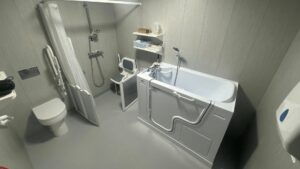
When combining a bath and shower in a small bathroom, safety and accessibility are key considerations. Installing grab rails or non-slip surfaces can prevent slips, especially when using an overhead shower. If stepping into a traditional bath is difficult, a shower bath with a lower entry point may be a safer solution.
For families with children or older adults, it is worth thinking about how each option works in practice. A separate shower cubicle can be easier to access, while a shower bath may require more careful manoeuvring.
When a Shower Bath May Not Be the Best Option
In some small bathrooms, a full bath may simply not be practical. If the space is extremely limited, it may be better to prioritise a walk-in shower, which takes up less room and is easier to use every day. While baths are enjoyable for soaking, they are not always the most functional choice in compact spaces.
In these cases, you can consider other options such as a wet room or a compact shower with storage solutions to maximise the available space. Even if a bath is not feasible, careful planning can still create a bathroom that feels comfortable and stylish.
Shower Bath Ideas for Small Bathrooms: A Summary
Having both a bath and a shower in a small bathroom is achievable with the right design choices. Shower baths, overhead showers, and compact layouts all provide practical solutions, each with its own benefits. By carefully considering space, safety, and daily use, you can enjoy the convenience of both bathing and showering without compromising comfort.
Need Expert Support to Make Your Bathroom Accessible?
At Age Care Bathrooms, our in-house designers and employed installers are experts when it comes to making sure you get the right adaptations and accessible bathroom solutions for the home you love.
Their main goal is to meet your specific requirements and preferences.
For further information, give the team a call today on 0800 999 8994, or fill out the form below for a free, no-obligation home consultation.