 Skip to content

Let’s be honest: the bathroom is one room in the house where we all deserve to feel completely at ease. It should be a place of privacy where people can wash and relax. However, for many seniors and those living with mobility challenges, the bathroom can slowly transition from a place of comfort to a source of anxiety.
One of the most common but overlooked “hurdles” in a standard bathroom is the height of the toilet. Although it sounds like a small detail, when you consider that the average person uses the toilet between 4 and 6 times a day, those few extra centimetres of height can make a big difference between a painful struggle and a dignified routine.
At Age Care Bathrooms, we specialise in removing these barriers. We’ve seen firsthand how a simple upgrade to a higher toilet can transform a customer’s daily life. It isn’t just about fitting a new toilet; it’s about future-proofing your home so you can stay in the house you love for longer, without the fear of a slip or the frustration of needing a helping hand.
In this guide, we’re going to look at all of the things you need to know about higher toilets for the elderly. We’ll break down the key numbers for heights, explain the different names you’ll come across, and help you decide if a comfort-height solution is the right fit for you.
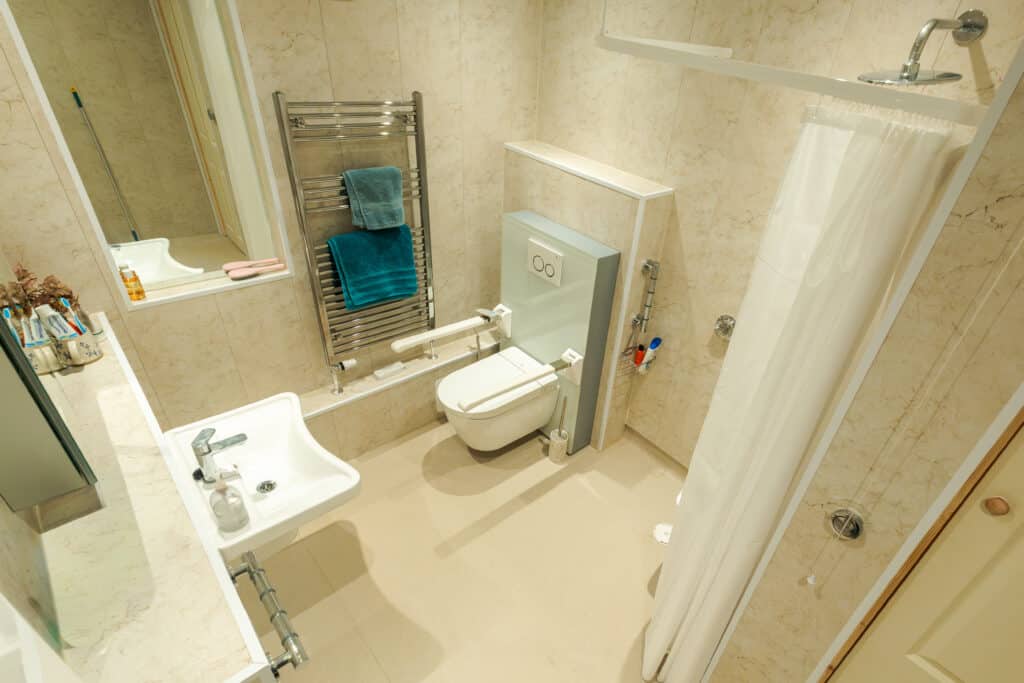
What are “Higher Toilets”?
If you’ve started to look for solutions, you have probably noticed that it isn’t easy to find exactly what you need. There are various terms like “comfort height”, “raised height” and “disabled toilets” being used. While all of these types of toilets try to hit the same goal, making it easier to sit down and stand up, there are some subtle differences you should know.
The Different Names for High Toilets
In the world of accessible bathroom design, “Higher Toilets” is the umbrella term, but here is how they are usually categorised:
- Comfort Height Toilets: This is the most common term you’ll find in high-street showrooms. They are designed to be slightly taller than a standard toilet to make them more ergonomic for the average adult.
- Raised Height & Extra High Toilets: These are specifically created for the mobility market. They usually offer a more significant increase in height compared to standard “comfort” models, making them the primary choice for those with significant joint pain or disability.
- Disabled & Doc M Toilets: These follow specific UK building regulations (Document M). These toilets are designed for maximum accessibility, often featuring a longer “projection” from the wall to assist with wheelchair transfers and a specific height to match the height of a standard wheelchair seat.
Standard Height Toilets vs High Height Toilets
To understand why higher toilets are so beneficial, it is good to compare them to a standard toilet used in the UK.
A traditional toilet in the UK sits at a height of 40cm from the floor to the top of the ceramic rim. For a younger adult, 40cm is perfectly fine. However, as we age, our muscle density decreases, and joints, specifically knees and hips, can become stiff. This can make dropping down to a 40cm seat hard and painful, while pushing yourself back up also requires significant strength.
A higher toilet for the elderly or disabled person typically raises the seat height from 40cm to around 46cm and 48cm (roughly 18 to 19 inches). That may not sound like a lot, but for people with limited mobility, it can be a big game-changer. It moves the toilet from a “low-squat” to a more natural chair position, reducing strain on the body every time you use the bathroom.
Who Benefits the Most from Higher Toilets?
While a comfort-height toilet is a great upgrade for almost anyone who prefers a more ergonomic seat, there are specific groups for whom a high toilet is less of a luxury and more of a daily necessity.
At Age Care Bathrooms, we often find that our customers aren’t just looking for a new look; they are looking for a solution to a very specific physical challenge. You, or a loved one, might benefit the most from a higher toilet if you are living with:
- Osteoarthritis or Rheumatoid Arthritis: When cartilage in the hips or knees wears down, the squat required for a standard toilet can be really painful. A higher seat reduces the range of motion needed, keeping the joints within a more comfortable zone.
- Reduced Core and Leg Strength: Growing old means that we naturally lose muscle mass. For those who find it difficult to lower themselves on the toilet slowly, or who need to rock back and forth to gain momentum to stand up, the extra height of a high toilet will provide leverage that is currently missed.
- Balance and Vertigo Issues: For those prone to dizziness, the transition from sitting to standing is a high-risk moment for a fall. A higher toilet requires less physical movement to stand, which helps keep your centre of gravity stable.
- Post-Operative Recovery: You may be recovering from a hip or knee replacement; the “90-degree” rules usually apply, which means bending your joint past a right angle shouldn’t be done. A standard height toilet makes this really difficult, but a raised toilet makes it effortless.
What are the Main Benefits of High Toilets for the Elderly and Disabled?
It just isn’t about making the bathroom easier to use; it is about the impact that ease has on your quality of life moving forward.
When we install a higher toilet as part of an accessible bathroom renovation, we see three primary benefits:
1) The Return of Dignity and Independence
This is the benefit our customers mention most. Needing to call a spouse, child, or carer into the bathroom to help you stand up can be a blow to your confidence. By installing a toilet that matches your physical capabilities, you regain the ability to use the bathroom privately and safely. It turns a “dependent” task back into an “independent” one.
2) Significant Reduction in Joint and Muscle Strain
By raising the toilet to a “chair height”, you are effectively sitting down rather than squatting. This protects your joints from unnecessary wear and tear, making your daily trips much more comfortable.
3) Increased Safety and Fall Prevention
Falls in the bathroom are a leading cause of hospital admissions for the over-65s. Many of these falls can occur during the sit-to-stand transition when a person loses their balance or their legs give way. A higher toilet minimises the distance your body has to travel. When combined with strategically placed grab rails, it creates a fail-safe environment.
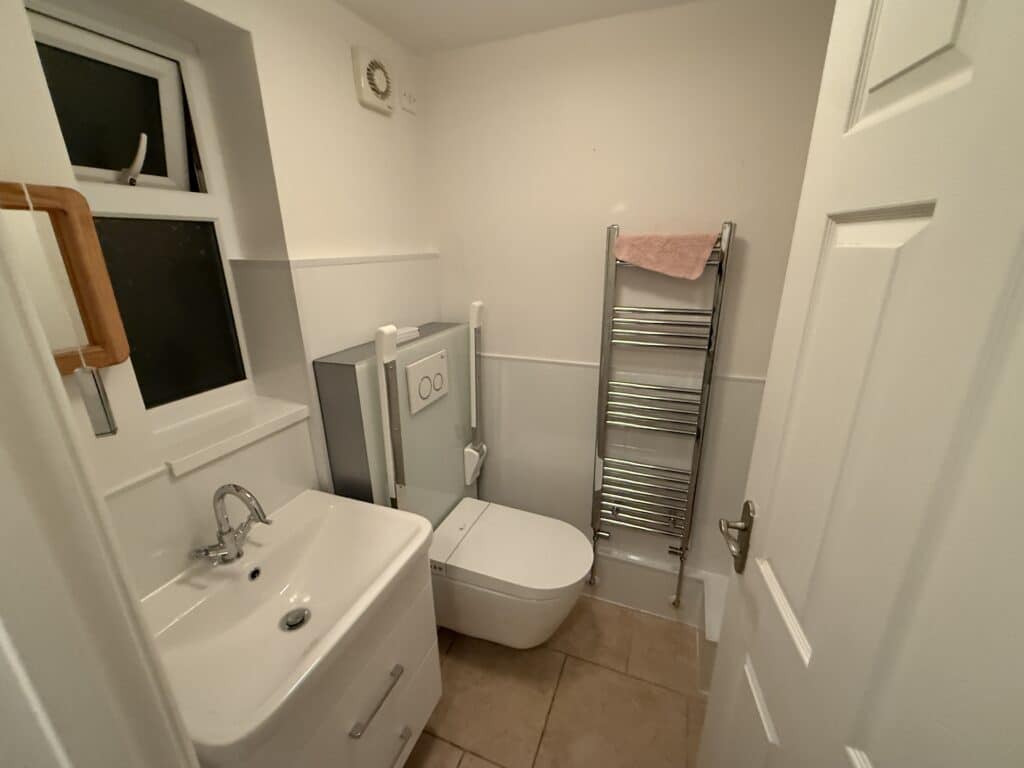
Key Considerations Before Installing a Higher Toilet for Your Bathroom
While the benefits are clear, it isn’t always a case of “the higher, the better”. There are a few things you should think about before you go ahead and ensure your new high toilet is actually comfortable for daily use…
- The Feet on the Floor Rule: Your safety depends on your stability. If the toilet is so high that your feet are dangling, you lose your base, making it harder to push back up. There’s also a risk of losing circulation to your lower legs.
- Impact on Bowel Health: The body is designed to go to the toilet in a squatting position. Sitting too upright on a high seat can cause bowel movements to be more difficult. If this is a concern, a discreet footstool can help bridge the gap.
- Household Use: A height that is perfect for you might be uncomfortable for a shorter partner, or visiting grandchildren, for example. If your bathroom is shared, we often recommend a “mid-height” option as a happy medium.
- Avoiding the Clinical Look: Many of our customers who are looking for a more accessible bathroom don’t want their home to feel like a hospital. Thankfully, many brands create and design high toilets to look just like standard models. Additionally, our design team can create and style your bathroom to be accessible while still feeling like a home.
- Pressure Points: For those with sensitive skin or a petite frame, a toilet that is too high can create pressure on the back of the thighs. Ensure that you are choosing a high toilet that is also contoured and supportive, not just tall.
How Much Do Higher Toilets Cost?
The cost of upgrading to a higher toilet varies depending on whether you are simply buying the toilet only or investing in a professional installation.
Higher Toilet Only Cost
A quality comfort-height or raised-height toilet typically starts between £200 and £500. Designer or specialist models, like those with integrated wash-and-dry features for further accessibility, will be higher.
A Full Installation Service
At Age Care Bathrooms, we provide an all-in-one service. We not only supply the higher toilet, but we also professionally install it, ensuring that the floor is reinforced if required and the plumbing is perfectly aligned. This service and installation will add to the cost, but it also provides decades of peace of mind, knowing that your new toilet will function correctly.
Are There Alternatives to High Toilets for the Elderly?
If you aren’t ready for a full replacement of your standard toilet, you may have come across “Raised Toilet Seats” that can clip on, or additional frames. While these are a cheaper short-term fix, we recommend considering the following…
Raised Toilet Seats that clip on usually cost between £20 and £60 and are great for a temporary post-surgery recovery, for example. However, they often lack stability after numerous uses. They can begin to shift under weight and are hard to keep clean.
Toilet Frames that sit over your existing toilet provide handles and additional height. However, they take up significant floor space and can be a trip hazard in smaller UK bathrooms.
Ultimately, a permanent solution, like a higher toilet unit, is the best way to future-proof your home. It is more hygienic, more stable, and looks like a standard piece of bathroom furniture rather than a mobility aid.
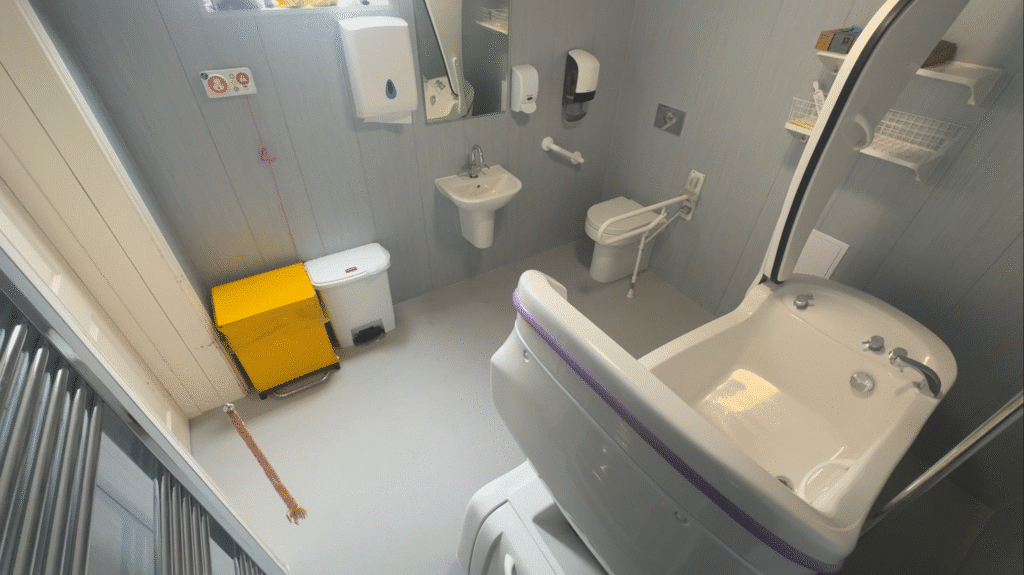
Higher Toilets for the Elderly and Disabled: A Summary
Upgrading to a higher toilet is one of the most effective ways to make your home ready for the future and protect your physical health. Here is a quick recap and key points we’ve covered in our guide:
- The Height Difference: Standard UK toilets sit at 40cm, while higher toilets for the elderly usually range from 46cm to 48cm. That 6-8cm difference really reduces the strain on hips and knees.
- The Terminology: Look for “comfort height” for a subtle lift or “Raised/Extra High” for more significant mobility support.
- Safety First: Ensure your feet can rest flat on the floor when seated on a higher toilet. If they dangle, the toilet is too high and can become a stability risk.
- Total Independence: By reducing the physical effort required to stand, a higher toilet allows you to use the bathroom privately without needing a helping hand.
- Permanent vs Temporary: While clip-on seats are cheaper, a permanent installation is more hygienic, more stable, and maintains the look of a high-quality home bathroom.
Take the First Step Toward a Safer Bathroom with Age Care
If your current bathroom is starting to feel like a struggle, we are here to help you turn it back into a space of total comfort. At Age Care Bathrooms, we don’t just supply toilets; we provide a complete, expert service designed around your requirements.
From your free home design consultation to our professional installation, we handle everything. We’ll even provide a custom 3D rendering of your new bathroom so you can see exactly how a higher toilet and a safer layout will look in your home before any work begins.
For further information, call our team today on 0800 999 8994 or fill out our contact form.